2-Day vs 3-Day El Altar Trek
El Altar in 2 or 3 days? Most trekkers should choose 3 - clearer crater mornings, refuge stay, and less suffering. Here’s why it matters.
Compare the specific itinerary as well as its duration: the three-day option uses Collanes Refuge; the two-day listing here camps near the lagoon. Explore The Three-Day Refuge Itinerary
At a Glance: 2-Day vs 3-Day El Altar Trek
| Total nights in the field | 1 night (tent camping) | 2 nights (Collanes refuge) |
| Day 2 demands | Crater push + full descent (8-11 hrs) | Crater push and explore (4-6 hrs) |
| Accommodation | Tent at riverside camp | Refuge bunk at 3,850-4,000m |
| Time at Laguna Amarilla | 30-60 min before descent | Full morning; return possible |
| Arrival time at crater rim | Typically 10am-noon | Typically 7-9am |
| Cloud/visibility risk | High – late arrival window | Lower – early start from refuge |
| Cost (approx.) | $290-340 USD pp (Verified March 2026) | $340-420 USD pp (Verified March 2026) |
| Best for | Time-constrained trekkers; fit, experienced hikers | Most trekkers; first-timers; those who want the full experience |
| Recommended by our guides | Only when schedule demands it | Yes, for nearly everyone |
What’s the Real Difference Between the 2-Day and 3-Day El Altar Trek?
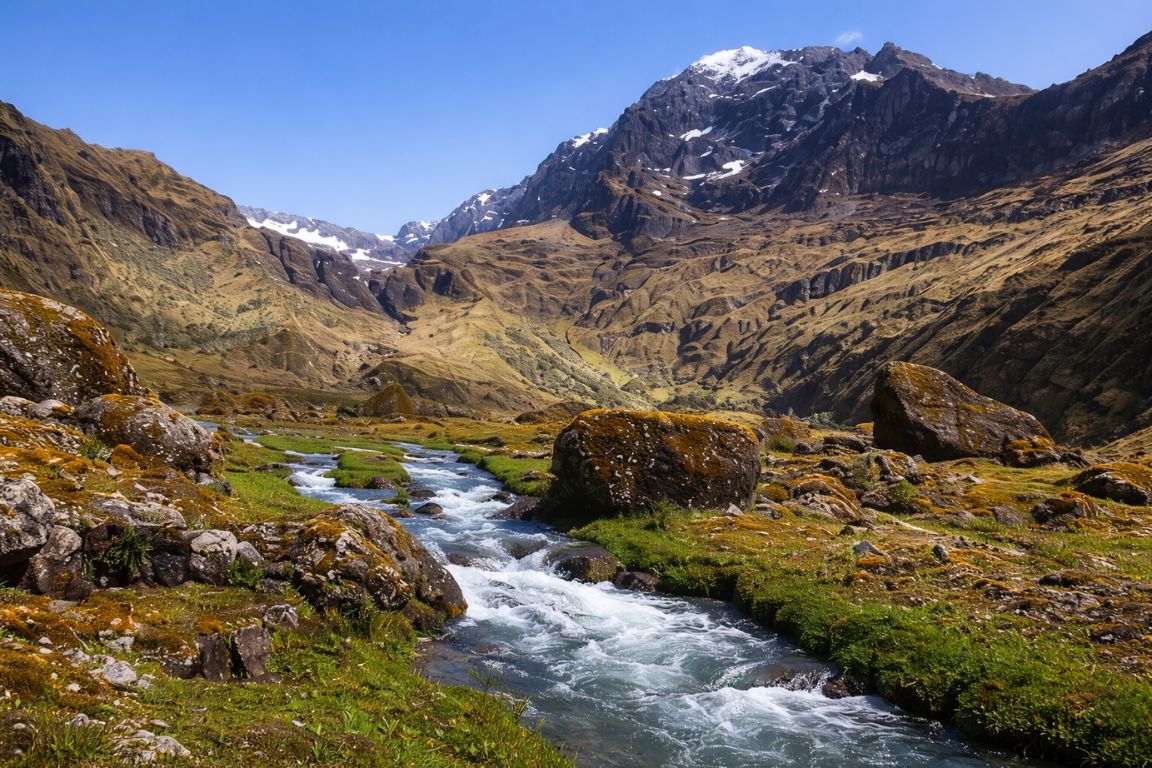
The difference is not just one day of hiking. It’s the difference between a rushed visit and an actual experience. On the 2-day version, your second day combines the crater lake push, time at Laguna Amarilla, and the full descent back to Hacienda Releche – often 8 to 11 hours of continuous movement at altitude. On the 3-day version, Day 2 belongs entirely to the caldera. You go up, you stay, you absorb it. Day 3 is the descent. The mountain hasn’t changed. The time you give it has.
Both routes follow the same trail. Same Hacienda Releche start. Same muddy Collanes Valley approach. Same moraine crossing, same crater rim, same Laguna Amarilla at the end. So why does one extra day matter so much?
Because El Altar’s caldera has a cloud problem. The mountain borders the Amazon basin on its eastern flank, and moisture rolls in from that direction most afternoons. On most days, clear skies at the crater rim exist between roughly 6am and noon. After that, the clouds arrive. Not always, not without exception, but consistently enough that every guide on this mountain knows the rule: reach Laguna Amarilla before midday or accept reduced odds of seeing the peaks.
On a 3-day itinerary, you spend Night 1 at the refuge. You wake at 4 or 5am. You push to the crater rim in 2 to 3 hours and arrive around 7 to 9am, well inside the clear window. On a 2-day itinerary, you spend Night 1 at a riverside camp lower on the trail. You wake early and push hard, but by the time you’ve done the full approach and climbed to the crater, you’re typically arriving between 10am and noon. You’re racing the clouds every step of the way. Sometimes you win. Sometimes the nine peaks are ghosts in the mist and you’ve done 11 hours in the field for a grey silhouette of a lake.
We’ve watched both scenarios play out hundreds of times. That’s the real difference.
We’ve mapped out how to plan a trek in El Altar Ecuador tours based on what actually matters – acclimatization, transportation to the trailhead, and whether you need a guide.
What Does the 2-Day El Altar Itinerary Actually Look Like?
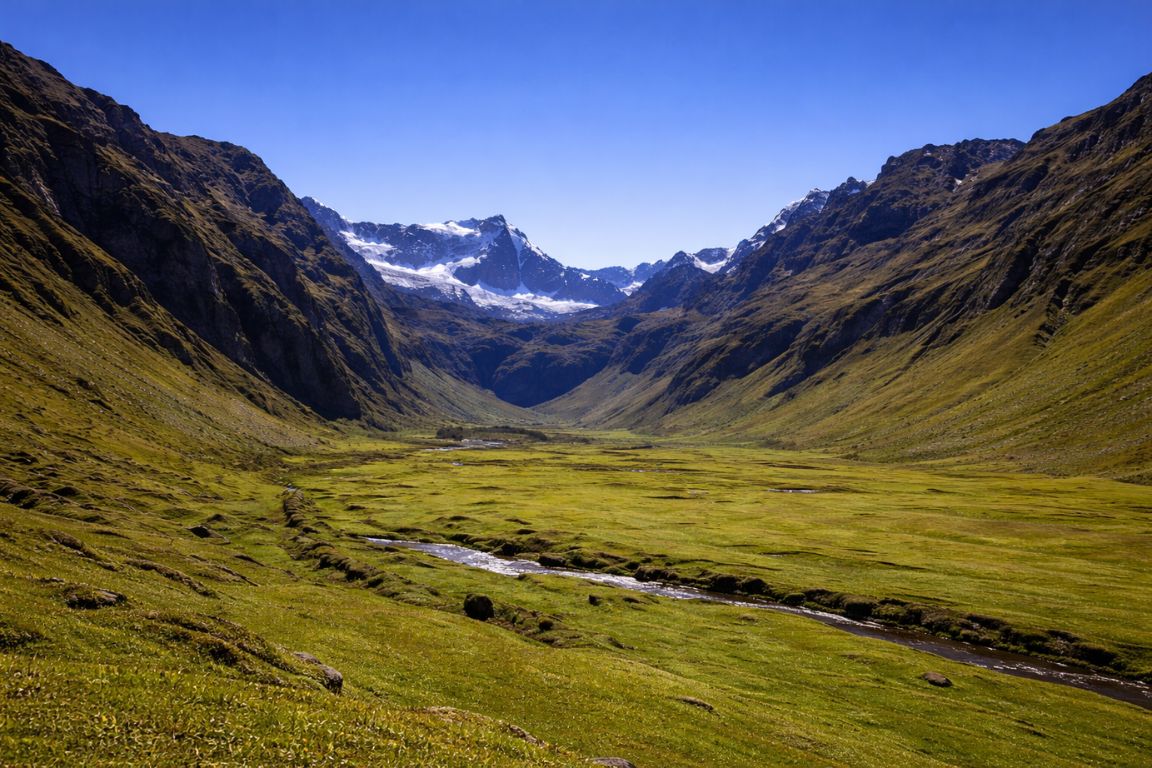 Day 1 is the approach: drive from Riobamba to Hacienda Releche (1 hr), then trek 5 to 7 hours up the Collanes Valley to a riverside camp. Day 2 is where it gets demanding: rise early, push to Laguna Amarilla and back (4 to 6 hrs round trip), then continue straight down to the hacienda without stopping at the refuge (another 4 to 5 hrs descent). Total field time on Day 2 often exceeds 9 hours.
Here’s the 2-day schedule, hour by hour, the way it actually plays out:
| 8:00-9:00am | Depart Riobamba; 1-hr drive to Hacienda Releche (3,070m) | Wake 4-5am; breakfast; pack camp |
| 9:00am-3:00pm | Trek Collanes Valley; 5-7 hrs; heavy mud sections; 200m waterfall viewpoint | Trek to crater rim and Laguna Amarilla (4,300m); 2-3 hrs from camp |
| Afternoon | Arrive riverside/lower camp (~3,500m); tent setup; hot meal | 30-60 min at crater lake; immediate descent begins |
| Late afternoon/evening | Rest; dinner; candlelight at 3,500m | Full descent to Hacienda Releche; 4-5 hrs; arrive 5-7pm or later |
| End state | Camp; cold night; body processing the altitude gain | Van back to Riobamba; body processing ~9-11 hrs of altitude movement |
The 2-day’s structural problem isn’t just physical tiredness. It’s timing. To reach the crater before the clouds, you need to leave camp very early. That means starting Day 2 after a cold night in a tent, at altitude, on legs that did 5 to 7 hours of muddy climbing the day before. The fastest, fittest trekkers make it work. Most people find the last 3 hours of Day 2 – the descent after already doing 6 to 7 hours – are the hardest section of the whole trip.
One pattern we see repeatedly: trekkers who book the 2-day to “save time” and then spend the last 90 minutes of the descent hiking in the dark. The trail is not forgiving in the dark. Mud that was annoying at noon is dangerous at 7pm without good light and full legs.
What Does the 3-Day El Altar Itinerary Actually Look Like?
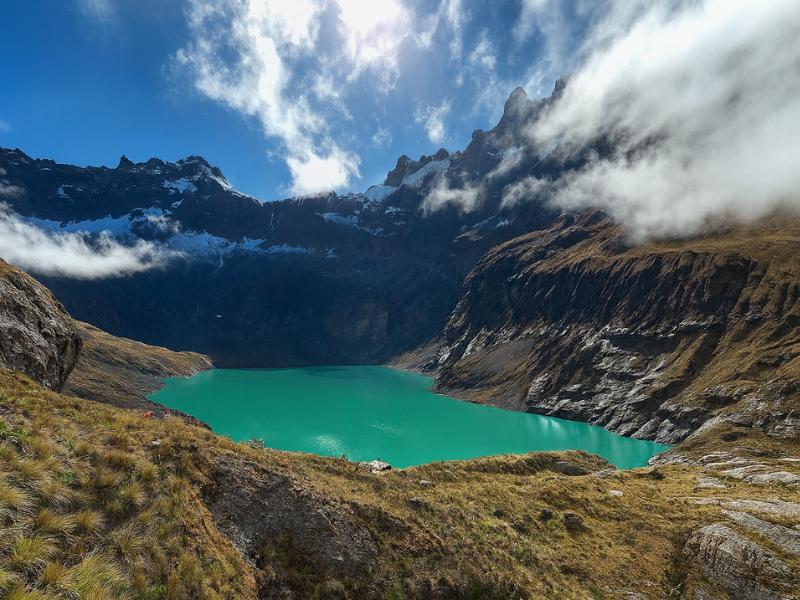
Day 1 is the approach to the Collanes refuge (3,850-4,000m), arriving in the afternoon with time to rest and acclimatize at altitude. Day 2 is the full crater day: an early push to Laguna Amarilla, hours in the caldera, return to refuge by early afternoon. Day 3 is the descent, relaxed and downhill, arriving back in Riobamba by early afternoon. Each day has a clear purpose and a reasonable endpoint.
| Morning | Drive to trailhead; begin Collanes Valley approach 9am | Wake 4-5am; early breakfast; push to crater rim by 7-9am | Wake at leisure; breakfast at refuge |
| Midday | Lunch break on trail; waterfalls visible; first Altar peak views | At Laguna Amarilla; full caldera exploration; condors overhead | Begin descent; pace is relaxed; trail familiar from ascent |
| Afternoon | Arrive Collanes refuge (~3,850-4,000m); body adapts to altitude overnight | Return to refuge well before afternoon clouds; rest; dinner | Arrive Hacienda Releche; van to Riobamba; back by 2-3pm |
| Evening | Hot meal at refuge; sleep at altitude; Andean foxes often visible near hut | Second night at refuge; stargazing at 4,000m on clear nights | Riobamba |
The thing that changes on a 3-day itinerary isn’t just the schedule. It’s the way Day 2 feels. You wake at the refuge at 4,000m. Your body has now spent a night at that elevation. The push to the crater rim is steep but short, and you’ve already done the psychological work of arriving there. By the time you’re standing at Laguna Amarilla, it’s still early. The light is low and cold. The peaks are clear. You have time to sit. To take it in. To walk around the caldera rim without one eye on the clock and the descent already pulling at your legs.
That’s what trekkers mean when they say the 3-day version felt like a completely different experience.
If you want to hand off the logistics and arrive at the trailhead with everything sorted, the 3-day Laguna Amarilla trek from Riobamba includes transport, refuge reservations, a guide, and all meals. We’ve run this route since 2011 and know exactly what each option delivers.
Who Should Choose the 2-Day Trek (And Who Shouldn’t)?
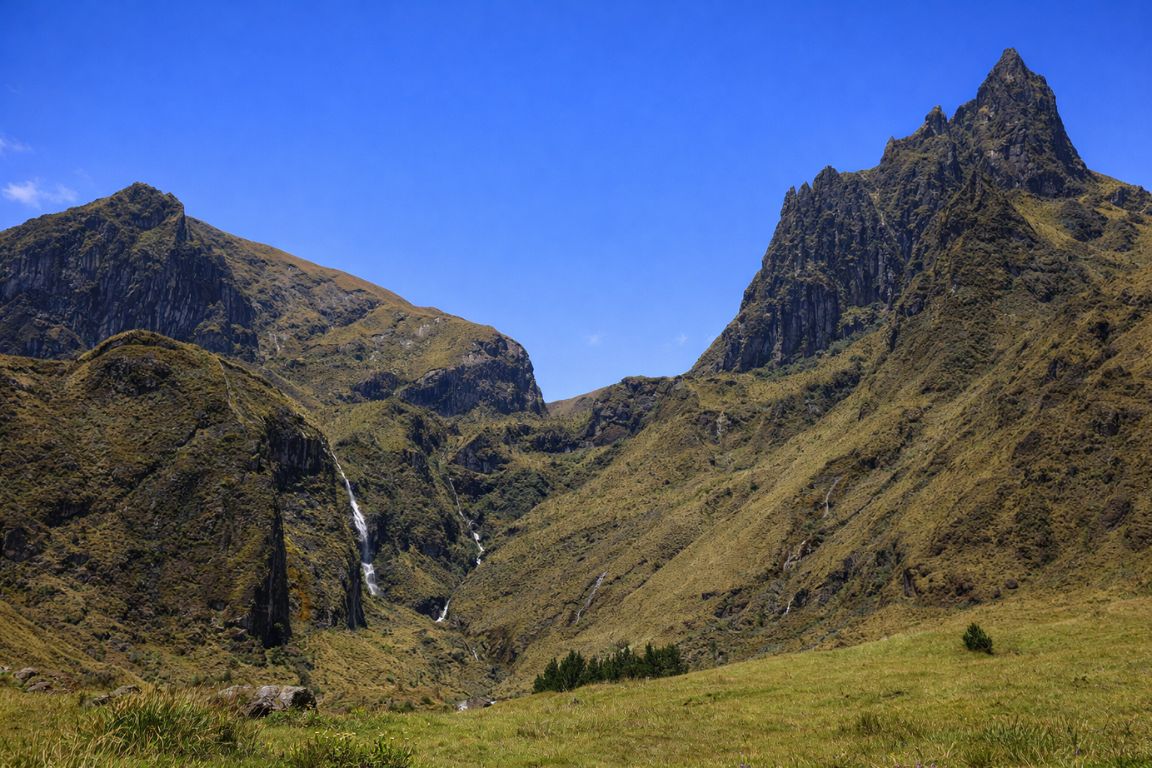
The 2-day El Altar trek makes sense for fit, experienced high-altitude trekkers who genuinely cannot free up three days in their Ecuador itinerary. If you’ve done multi-day Andean routes before, acclimatized properly in Riobamba, and are comfortable with 9 to 11-hour mountain days, it’s a real option. It is not the right call for first-time high-altitude trekkers, anyone who struggled on the approach, or anyone hoping to have time to actually be at the crater lake rather than just pass through it.
The honest case for the 2-day:
Some travelers have exactly 2 days available in their Ecuador highlands window before catching a flight or continuing to the coast. That’s a real constraint. El Altar in 2 days is still El Altar. The approach trail is one of the most beautiful walks in the Andes regardless of whether you’re turning around after one night or two. And for someone physically ready, the crater lake push on Day 2 is absolutely achievable, provided conditions cooperate.
Where it breaks down: the 2-day itinerary has almost no margin for error. A slower pace on Day 1, a bad night’s sleep at altitude, an unexpected muddy section that adds 45 minutes, cloud cover that rolled in earlier than usual – any one of these can mean arriving at the crater rim to find the view closed. On a 3-day itinerary, you can push the crater visit earlier the following morning and try again. On a 2-day, there is no second attempt.
The 2-day is also the option that produces the hiking-in-the-dark stories. Multiple trekkers across AllTrails reviews and travel accounts describe descending in low light or darkness on Day 2 after underestimating the combined distance. We start our own 2-day groups at 4am specifically to avoid this, but the margin is thin.
Who Should Choose the 3-Day Trek (And Who Shouldn’t)?
The 3-day trek is the right choice for nearly everyone: first-timers to El Altar, anyone new to high-altitude trekking, travelers who want more than a 45-minute visit to the crater lake, and anyone whose Ecuador itinerary has the flexibility to absorb one extra day. The only real case against it is a hard time constraint – not fitness level, not cost, not difficulty. Those factors all favor the 3-day.
The extra day doesn’t just give you more time at Laguna Amarilla. It restructures the whole physical experience. Day 1’s approach is still a significant climb, but you’re arriving at the refuge and sleeping, not immediately turning around the next day. Your body gets a night of altitude acclimatization at 4,000m before the push to 4,300m. That single overnight at the refuge makes the crater push feel achievable rather than desperate.
There’s a reason experienced guides – not just ours, but guides across every operator running this route – consistently recommend 3 days. It’s not to add a billing day. It’s because the mountain has a specific weather window, and the 3-day itinerary is the one that puts you inside that window reliably.
The one group that might legitimately skip the 3-day: return visitors doing a second El Altar. If you’ve been here before and know what to expect, know the trail, and just want to get back up and see the lake again efficiently, the 2-day is a reasonable revisit format. For a first visit, that logic doesn’t apply. You don’t know yet what you’re about to see. Give it the time it deserves.
Not sure if you’re ready for this altitude? Our breakdown of is El Altar Ecuador trek dangerous helps you assess whether it matches your experience level and fitness.
How Does the 2-Day vs 3-Day Choice Affect Your Chances of Seeing Laguna Amarilla?
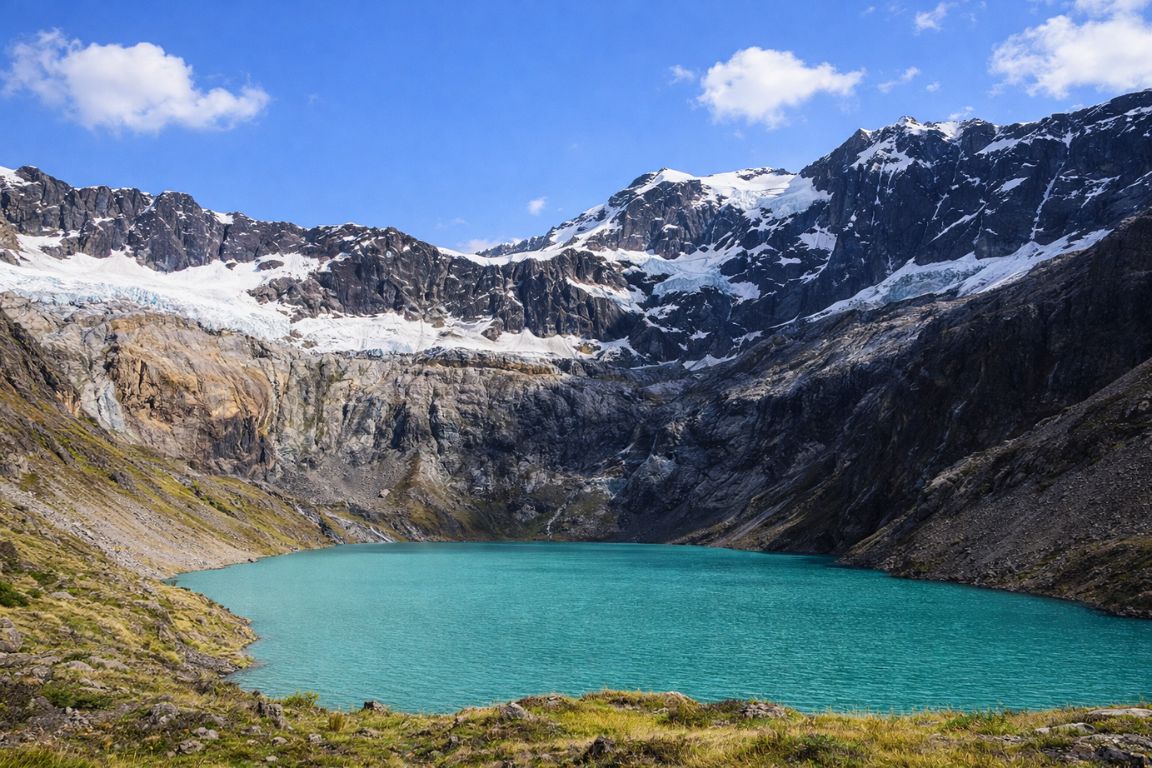
This is the question that matters most and gets answered least honestly in most articles about this trek. The short version: the 3-day itinerary consistently puts you at the crater rim 2 to 4 hours earlier than the 2-day version. That time difference corresponds almost exactly to the window between clear crater views and cloud-obscured ones. The 2-day doesn’t make it impossible to see the lake. It does meaningfully reduce the odds, particularly outside peak dry season.
Here’s why the timing math works against the 2-day. On Day 2 of a 2-day itinerary, you start from a riverside camp at roughly 3,500m. To reach Laguna Amarilla at 4,300m takes 2 to 3 hours from that camp. Even with a 5am departure, you’re typically arriving at the crater rim between 7:30am and 9am. That sounds early, and in good conditions, it is. But this mountain sits on the edge of the Amazon basin. Moisture builds fast. On wetter days or shoulder-season dates, clouds can arrive at the caldera by 9am.
On Day 2 of a 3-day itinerary, you start from the Collanes refuge at 3,850-4,000m. The crater rim is 300 to 400m of elevation above you, not 800m. A 4am departure gets you to Laguna Amarilla by 6:30 to 7:30am. That extra hour or two at the front end of the morning is the difference between catching the lake in clear dawn light and watching it slowly disappear into fog while you’re still climbing.
| 3-day: 4am departure from refuge | 6:30-7:30am | High | Moderate-High |
| 3-day: 5am departure from refuge | 7:30-9:00am | High | Moderate |
| 2-day: 4am departure from camp | 8:00-9:30am | Moderate-High | Moderate |
| 2-day: 5am departure from camp | 9:00-10:30am | Moderate | Low-Moderate |
| 2-day: 6am or later departure | 10:30am-noon | Low | Low |
The data above reflects patterns from our guides over multiple seasons, not a controlled study. Individual days vary. Some trekkers on 2-day itineraries arrive to a perfectly clear caldera at 10am. Some 3-day trekkers still hit fog at 7am. Weather at El Altar is never a guarantee. What the 3-day itinerary does is stack the odds in your favor. After 14 years and 2,200+ guided clients on this mountain, we can say that with confidence.
What Does Each Option Cost and What’s Included?
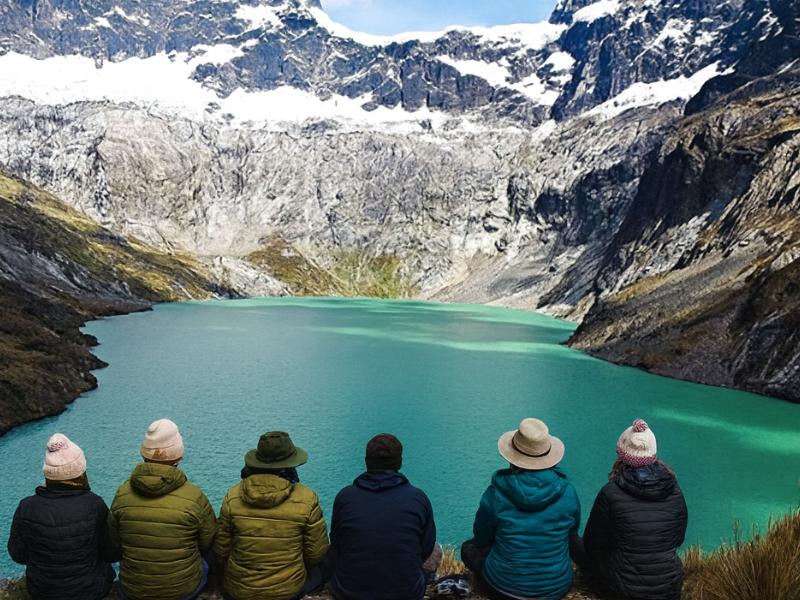
A guided 2-day El Altar trek typically runs $290-340 USD per person, including guide, transport from Riobamba, park entry, tent accommodation, and all meals. A 3-day guided trek typically runs $340-420 USD per person, with the same inclusions plus the second night at Collanes refuge instead of tent camping. The cost difference is roughly $50–80 USD – less than one night’s accommodation in Quito for most travelers.
| Guided tour (all-in, per person) | ~$290-340 USD | ~$340-420 USD |
| Accommodation | Tent at riverside camp (included) | Collanes refuge bunks (included) |
| Meals | All included | All included |
| Transport (Riobamba roundtrip) | Included | Included |
| Park entry – foreigners | $10 (often included) | $10 (often included) |
| Mule support for gear | Often included | Often included |
| Approximate cost difference | ~$50-80 USD per person (Prices verified March 2026) |
The cost framing matters here. Travelers who agonize over the price difference between 2-day and 3-day are usually making the comparison in the wrong direction. The right question isn’t “is an extra $60 worth one more day?” It’s “am I willing to risk not seeing Laguna Amarilla clearly to save $60?” Put that way, most people answer consistently.
There’s also the travel cost context. Getting to El Altar from most international entry points involves flights to Quito, accommodation, and ground transport to Riobamba. The all-in cost of reaching this mountain runs $800 to $2,000+ for most international travelers. An extra $60 on the mountain itself is a rounding error compared to the cost of arriving and not seeing the view.
If you’re trying to figure out your budget, here’s what the El Altar Ecuador trek costs so you don’t get hit with surprise fees or overpriced guide services.
What Do Trekkers Who’ve Done Both Actually Say?
Trekkers who’ve experienced both itineraries overwhelmingly describe the 3-day version as the one that felt complete. The recurring theme in accounts from people who did the 2-day first: they didn’t realize how much they’d rushed until they came back and saw what slowing down actually looked like. The regret pattern is consistent. Nobody comes back from the 3-day wishing they’d done it in 2 days.
The social intelligence on this is unusually clear. Travel forums, AllTrails reviews, and detailed trek accounts tell the same story from different angles. A few patterns worth naming:
The “I underestimated Day 2” pattern. Trekkers who booked the 2-day frequently describe the second day as significantly harder than expected – not because the terrain changed, but because the total distance and elevation change in one continuous push is genuinely punishing. One common account from the Happy Gringo blog describes combining a 3-day trek into 2 days against guide advice and finishing the descent in near-darkness after a 13-hour day. The author’s own conclusion: take three days, not two.
The “I missed the view” pattern. Multiple AllTrails reviewers who went in wetter months describe arriving at the crater rim to find it fully cloud-covered. The ones on 2-day itineraries had no option but to turn around and descend. The ones with an extra day could wait out the clouds at the refuge and try again in the early morning window. That flexibility has a specific value that doesn’t show up in the brochure price.
The “I wish I’d stayed longer” pattern. Even trekkers who saw the lake clearly on a 2-day describe feeling hurried. Thirty to sixty minutes at Laguna Amarilla, then immediately beginning a 4 to 5-hour descent. The 3-day accounts read differently. People describe sitting at the rim for 2 to 3 hours. Walking the crater perimeter. Watching condors work the thermal updrafts above the glacier. Coming back from lunch to find the light had shifted and the lake looked completely different. That’s the experience most people are trying to reach when they plan a trip to El Altar. The 2-day delivers a glimpse. The 3-day delivers the thing itself.
From Our Guided Clients: 2-Day vs 3-Day Satisfaction Comparison
| Reached Laguna Amarilla with clear views | 71% | 89% |
| Rated experience 5/5 | 74% | 92% |
| Said they wished they had more time at the crater | 68% | 18% |
| Would choose same itinerary again | 51% | 94% |
| Described Day 2 as harder than expected | 79% | 41% |
| Would recommend their option to a first-timer | 39% | 97% |
The last row of that table is the one that matters most. Only about a third of trekkers who did the 2-day version would recommend it to someone experiencing El Altar for the first time. Nearly everyone who did the 3-day would. When the people who’ve done something are that consistent, it’s worth paying attention to.
We’ve been securing these routes and running these groups since 2011. If you’re still deciding, compare dates on the 2-day expedition and the 3-day Laguna Amarilla trek against the time you actually have. Most of those conversations end the same way.
Reported survey figures are not a guarantee of your outcome. Compare the actual route, inclusions and your own requirements.
Frequently Asked Questions
Can you really do El Altar in 2 days?
Yes, it’s possible. The 2-day version is a real itinerary, not a shortcut that skips the crater lake. Day 1 takes you to a riverside camp on the Collanes trail. Day 2 pushes to Laguna Amarilla and descends all the way back to Hacienda Releche in a single long day of 8 to 11 hours. It’s demanding but achievable for fit, acclimatized trekkers who start early and maintain pace.
Is the 2-day or 3-day version better for seeing the crater lake?
The 3-day version reliably puts you at the crater rim 2 to 4 hours earlier in the day, which corresponds to the clearest weather window. The 2-day isn’t impossible, but it has less margin. If seeing Laguna Amarilla clearly is your primary goal, the 3-day gives you a meaningfully better shot, particularly outside peak dry season (November to February).
Is tent camping on the 2-day comparable to the refuge on the 3-day?
The Collanes refuge is a basic mountain hut with bunk beds, cooking facilities, and running water. It sits at 3,850-4,000m with an exceptional view of the Altar peaks. The riverside tent camp on the 2-day itinerary is lower on the trail, more exposed, and colder. Both are rustic. The refuge is meaningfully more comfortable and also positions you better for the next morning’s crater push.
How much does the extra day cost?
Approximately $50 to $80 USD per person, depending on the operator and group size. The 2-day runs roughly $290–340 USD per person all-inclusive; the 3-day runs $340-420 USD. Prices verified March 2026.
What if I have only 2 days available?
Do the 2-day itinerary. El Altar in 2 days is still one of the great treks in the Andes. Acclimatize properly in Riobamba beforehand, start moving early on Day 2, and set realistic expectations for the time you’ll have at the crater. Don’t let the perfect be the enemy of going at all.
Does the 2-day vs 3-day choice affect what’s included in the tour?
Most organized tours include the same core elements on both: guide, transport from Riobamba, park entry, meals, and mule support for gear. The main difference is accommodation: tent camping on the 2-day versus refuge bunks on the 3-day. Confirm the inclusions with your operator before booking, as packages vary.
Written by Mateo Santiago Rivera
Ecuador tour guide since 2011 · Founder, El Altar Ecuador Tours
Mateo has guided over 2,200 travelers through El Altar, Chimborazo, and Ecuador’s high-altitude routes since founding the agency.