How to Plan an El Altar Trek
El Altar trek from Riobamba takes 2-3 days to Laguna Amarilla at 4,300m. Best season? Nov-Feb. Mud is brutal - rubber boots and a guide are essential.
Start with the exact route, overnight arrangement and departure base. The three-day option combines Collanes Refuge with return transport from Riobamba. Explore The Three-Day Refuge Itinerary
El Altar Trek Quick Facts
| Location | Sangay National Park, Chimborazo Province, Ecuador |
| Nearest city | Riobamba (~1 hr by road) |
| Summit / Highest trek point | Laguna Amarilla at ~4,150-4,300m (13,600-14,100 ft) |
| El Obispo peak (technical climb) | 5,319m / 17,451 ft – expert mountaineers only |
| Standard route duration | 2 days / 1 night (Collanes) or 3 days / 2 nights (recommended) |
| Trailhead | Hacienda Releche, 15 min walk from Candelaria village |
| Park entry fee | $10 USD foreigners / $2 USD Ecuadorian nationals – valid 2 weeks (Prices verified March 2026) |
| Best months | November-February (driest); June-September (secondary dry window) |
| Technical difficulty | Moderate to strenuous – no technical climbing required for crater lake |
| UNESCO status | Sangay National Park is a UNESCO World Heritage Site |
| Guide requirement | Certified guide required by Ecuadorian law for multi-day national park treks |
| Mule support | Available from Hacienda Releche for gear transport |
What Is El Altar and Why Do Trekkers Keep Coming Back?
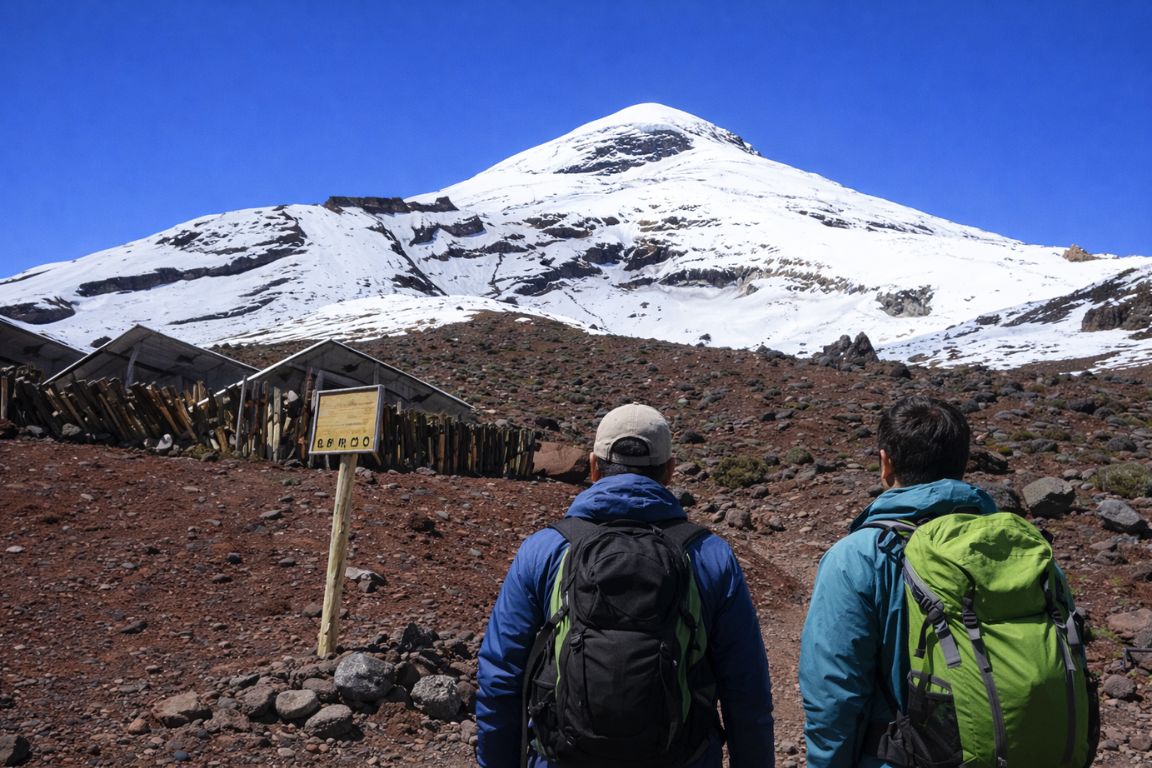
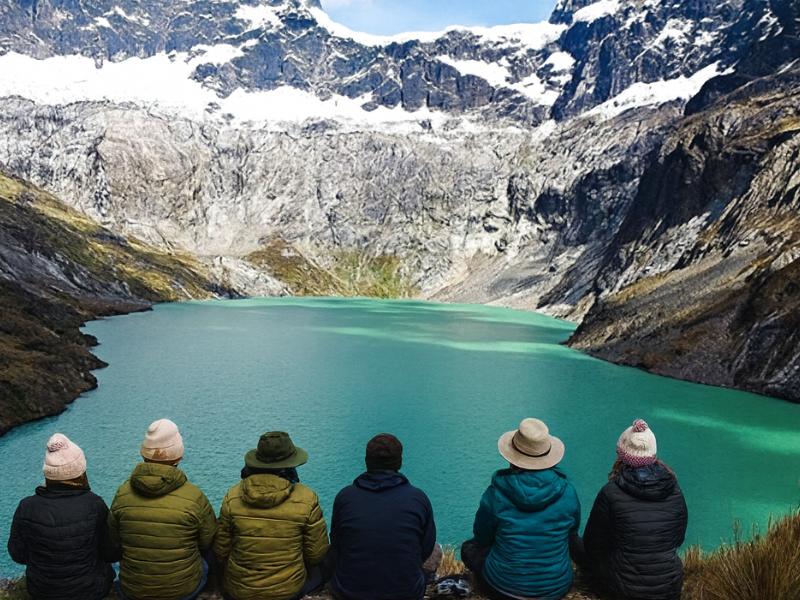
El Altar (Capac Urku in Kichwa, meaning “almighty mountain”) is an extinct volcano inside Sangay National Park whose summit collapsed centuries ago, leaving nine jagged peaks arranged in a horseshoe around a glacial crater lake. At 5,319m for the highest point, it’s Ecuador’s fifth-highest mountain. The trek to Laguna Amarilla is one of the most remote and visually arresting routes in the Andes, and it sees a fraction of the traffic of Cotopaxi or Chimborazo. That’s the whole point.
The Spanish named it El Altar because the ring of peaks reminded them of a cathedral: a bishop surrounded by monks and nuns mid-prayer. The Kichwa name is older and more honest. This is a mountain that commands you. When clouds part and those ice-covered spires appear above the caldera, you understand immediately why people who’ve done this trek once sign up again.
We’ve been running these routes since 2011. Over 2,200 travelers later, the reaction at the crater rim is still the same. Silence. Then someone says something like “I didn’t expect that.” Nobody ever does.
The approach through páramo grassland, past waterfalls and feral horses, gives you almost no preview of what’s waiting at the top. That’s by design, in a sense. The Andes don’t do dramatic reveals cheaply. El Altar sits inside a UNESCO World Heritage Site, receives far fewer visitors than Ecuador’s more famous volcanic treks, and rewards the effort with a crater lake whose sulfur and mineral content turns the water yellow-green at certain light angles. The color shifts. It’s not the same lake at 8am that it is at noon. That’s what keeps people coming back.
When Is the Best Time to Trek El Altar?
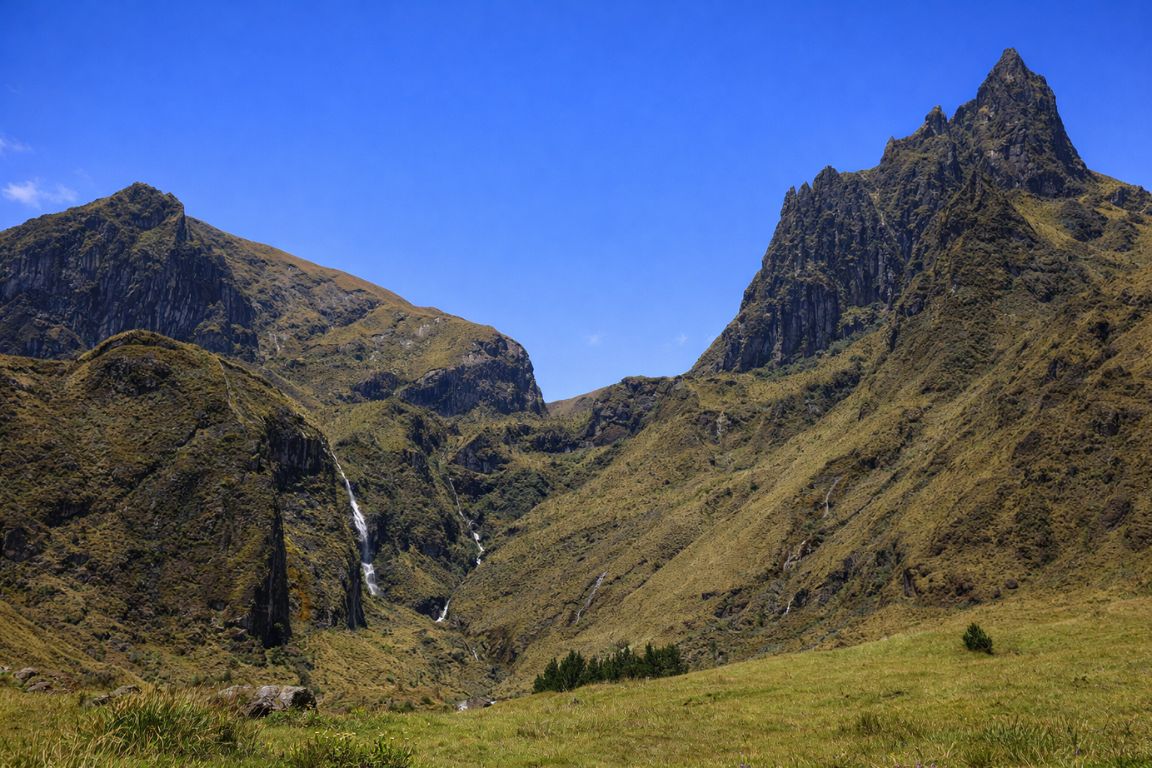
The driest and most reliable window for El Altar is November through February. June through September offers a second viable option, though more unpredictable. Avoid March through May and October to November if possible: these are peak wet months when trails turn to knee-deep mud channels and cloud cover can block the crater views entirely for multiple consecutive days.
Here’s what the weather actually does, based on our years on this mountain:
| November-February | Driest months; best visibility; firmer trails | Best window |
| December | Peak dry season with clearest crater views | Ideal |
| June-September | Drier than shoulder months; some rain likely | Good, pack rain gear |
| March-May | Heavy rain; trail becomes dangerous bog | Avoid |
| October-November | Transition period; highly unpredictable | Possible, risky |
The catch that almost nobody warns you about: El Altar sits on the western edge of Sangay National Park, which borders the Amazon basin. Moisture blows in from the east year-round. There is no month with a guaranteed blue-sky day. Even in dry season, mornings often start clear, clouds build by midday, and you’re watching the crater disappear into fog by 2pm. The lesson from our guides is simple: get to Laguna Amarilla early. We push for a pre-dawn start on summit day specifically so you’re at the rim before the cloud bank arrives.
Daytime temperatures on the approach trail hover around 10-15°C. Nights at the refuge drop to freezing or below, year-round. That’s not a seasonal variation. Bring a sleeping bag rated to at least -5°C regardless of when you go.
Planning ahead? Our guide to the best time to visit El Altar Ecuador tours breaks down dry season versus wet season and what you’ll actually experience on the trek.
Which Route Should You Take to El Altar?
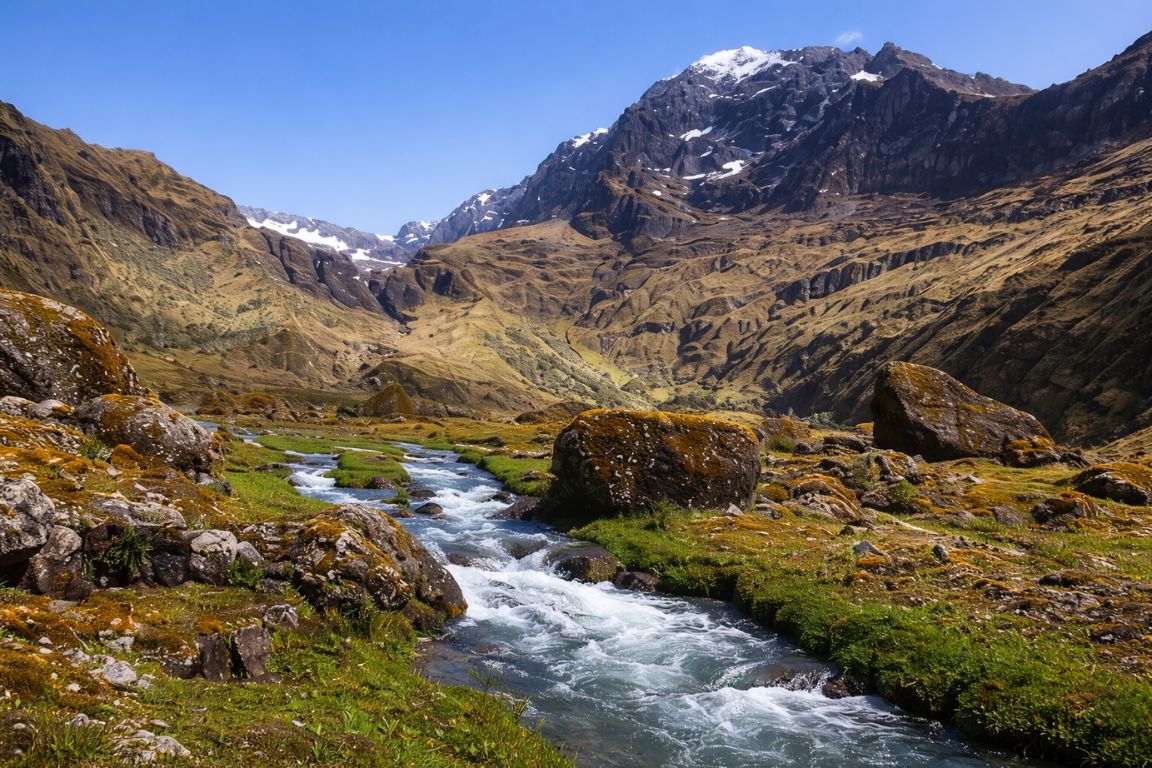 For first-timers, the Collanes Valley route via Hacienda Releche is the right call. It’s a 2 to 3-day trek, mule support is available for gear, the route is well-worn, and it ends at Laguna Amarilla inside the caldera. The Bocatoma route to the western lagoons is longer at 3 days minimum, more remote, and best saved for return visits or experienced trekkers with wilderness camping skills.
| Collanes (via Hacienda Releche) | 2-3 days | Moderate-strenuous | First-timers, most trekkers | Laguna Amarilla crater lake at 4,300m |
| Bocatoma (western lagoons) | 3-4 days | Strenuous | Experienced trekkers, return visits | 5 multi-colored lagoons; near-zero traffic |
| El Obispo summit climb | 4-5 days | Technical mountaineering | Expert climbers only | Summit at 5,319m; glacier and rock climbing |
On the Collanes route, Day 1 starts at Hacienda Releche (3,070m) and follows the Collanes Valley through páramo, past a 200-meter waterfall, to the basecamp refuge at roughly 3,200-3,500m. The trail gains significant elevation and gets progressively muddier. Plan 5 to 7 hours for the approach.
Day 2 is the crater push. You leave basecamp before sunrise, gain another 700 to 1,000 meters in altitude, cross the moraine, and reach the caldera. Laguna Amarilla sits in the center of the crater, surrounded by all nine peaks. Budget 3 to 5 hours to reach the rim depending on conditions. If you’re doing a 3-day itinerary, you spend a full day at high altitude around the caldera before descending on Day 3. That extra day is not wasted time. It’s where the trek earns its reputation.
If you'd rather let someone else coordinate the logistics while you focus on actually being there, the 3-day trek to Laguna Amarilla from Riobamba includes a guide, meals, and transport from the city. We’ve done this route hundreds of times. We know where the trail disappears into a bog and where it doesn’t.
Wondering which peak is worth your effort? Our guide on El Altar vs Cotopaxi in El Altar Ecuador tours shows you exactly what sets each one apart beyond just altitude numbers.
How Fit Do You Need to Be for El Altar?
El Altar is a challenging high-altitude trek, not a technical climb. You don’t need mountaineering experience, but you do need baseline cardiovascular fitness. You should be comfortable hiking 5 to 8 hours a day at altitude, with elevation gain of 800 to 1,000 meters per day. If you’ve done Cotopaxi or another 4,000m+ trek recently without significant distress, you’re ready. If this would be your first high-altitude day, acclimatize in Riobamba for at least one night first.
The elevation numbers are not the hardest part. The mud is. Sections of the Collanes trail can swallow a boot whole. You’re not hiking so much as negotiating. Heavy, uneven steps on soft ground for hours depletes energy differently than clean trail does, and it’s something almost no amount of gym fitness fully prepares you for. Our guides describe it as hiking with ankle weights that keep getting heavier. That’s accurate.
| Casual walker (gym-only fitness) | Not recommended without serious prep | High risk of not reaching crater lake |
| Regular hiker (day hikes to 2,500m) | Strong base but acclimatization essential | Achievable with 3-day itinerary, mule support |
| Active hiker (multi-day trails, 3,000m+) | Solid candidate | Good chance of summit day success |
| Experienced trekker (4,000m+ routes) | Well-suited; can push 2-day if needed | Full experience likely |
Acclimatization in Riobamba is not optional – it’s the difference between reaching the crater and turning around 2 hours short of it. Riobamba sits at 2,750m. One night there is minimum. Two nights is better. Avoid alcohol the day before the trek, drink more water than you think you need, and consider coca tea. It won’t cure altitude sickness but it takes the edge off the first symptoms.
Wondering about the risks before you commit? Check out our guide on is El Altar Ecuador trek dangerous – it covers everything from altitude sickness to route conditions.
What Permits and Fees Do You Need for El Altar?
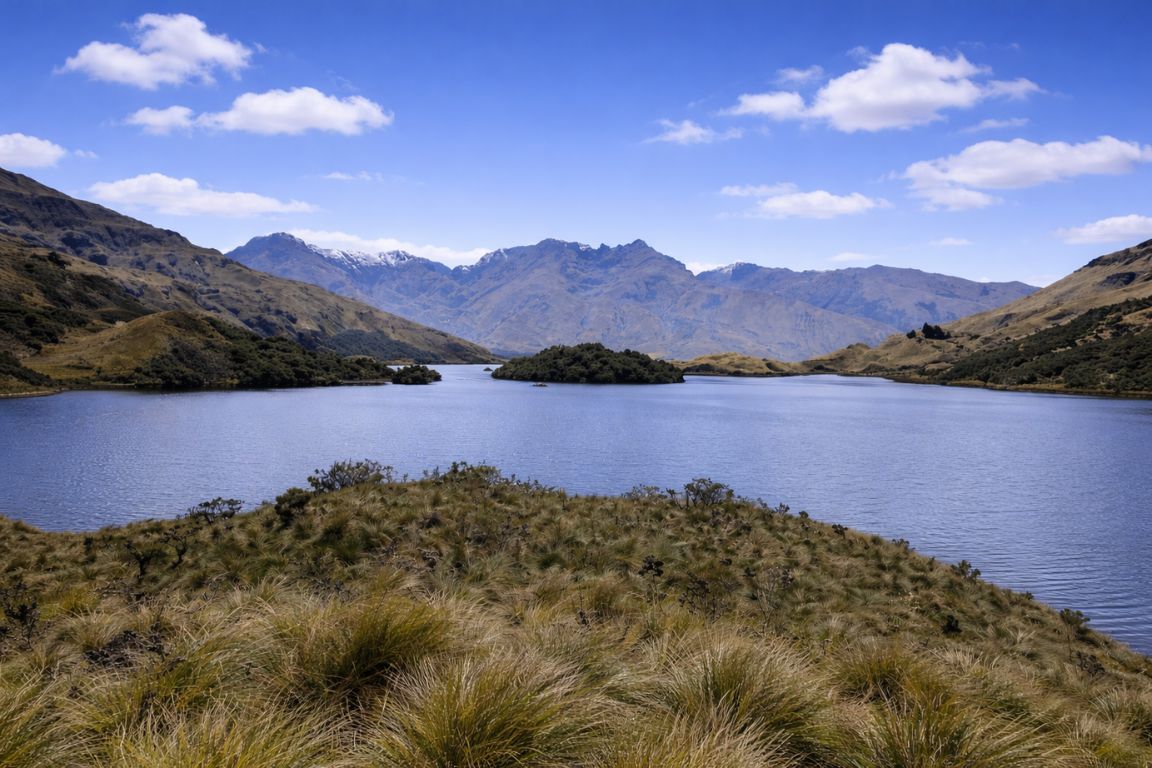
Sangay National Park charges $10 USD for foreign visitors, valid for two weeks across all park sectors. You register at the Hacienda Releche trailhead before starting the hike. A certified guide is required by Ecuadorian law for all multi-day treks inside national parks. Mule rental for gear transport runs approximately $10 per mule per day. There are no advance online permit bookings required for the standard trekking routes as of early 2026.
| Sangay National Park entry – foreigners | $10 | Valid 2 weeks (Verified March 2026) |
| Sangay National Park entry – Ecuadorian nationals | $2 | Same validity (Verified March 2026) |
| Mule hire (gear transport) | ~$10/day per animal | Available at Hacienda Releche |
| Hacienda Releche overnight stay | ~$21-25 | Basic dorm or private rooms |
| Refuge at basecamp | ~$10-15 | Basic facilities, cooking available |
| Certified guide (if not booked via operator) | ~$80-150/day | Required by law; hire in Riobamba |
The guide requirement is worth addressing directly. Enforcement varies, but the law is clear, and beyond legal compliance there’s a real safety case. The trail to El Altar loses definition in several sections, especially after rain. It crosses rivers, passes through terrain with no cell signal, and reaches elevations where altitude sickness and hypothermia are both genuine risks. We’ve run rescue operations on this mountain. Not many, but enough to say with certainty: a guide isn’t bureaucratic overhead. It’s the difference between a story you tell and a situation you don’t come back from.
We've been securing park access and arranging certified guides since 2011. A guided 3-day Laguna Amarilla trek is the straightforward way to arrive at the trailhead with that already arranged.
What Should You Pack for an El Altar Trek?
Rubber boots are the single most important gear item for El Altar. Not trail runners. Not even standard hiking boots. Rubber boots, because sections of this trail reach knee-deep mud that will overwhelm anything else. Beyond that, the key priorities are waterproof layers, a cold-rated sleeping bag, and sun protection for high-altitude UV. Everything else is secondary.
Our guides hand out rubber boots at the trailhead for clients who haven’t brought their own. Every single time, those people are grateful within the first kilometer. The mud on this trail is not a minor inconvenience. At certain points in the middle sections, it is a serious physical obstacle. Tall rubber boots with wool socks pulled over them to prevent chafing are the standard kit. Not optional.
| Footwear | Tall rubber boots + wool socks | Non-negotiable |
| Footwear (backup) | Dry shoes or camp sandals for refuge | High |
| Warmth | Sleeping bag rated to -5°C | Non-negotiable |
| Layers | Thermal base, fleece mid-layer, waterproof shell | High |
| Rain protection | Full rain poncho or hardshell jacket | High |
| Dry clothes | Full set sealed in dry bag for camp | High |
| Sun protection | SPF 50+ sunscreen, sun hat, UV sunglasses | High – altitude UV is severe |
| Hydration | 2L water + purification tablets or filter | High |
| Altitude support | Coca tea / altitude medication if prescribed | Recommended |
| Headlamp | Fresh batteries – pre-dawn summit start | High |
| Trekking poles | Especially useful on muddy descent | Recommended |
If you book through an organized tour, most operators including the Unknown Andean Trail trek provide camping gear, sleeping bags, rain ponchos, and trekking poles. Check what’s included before packing. There’s no sense carrying a 20kg pack up this mountain if a mule and your operator have it covered.
What Are the Biggest Mistakes Trekkers Make at El Altar?
The five most common things that derail an El Altar trek: skipping acclimatization, underestimating the mud, compressing into a 2-day itinerary when a 3-day is right, wearing the wrong footwear, and arriving at the crater rim too late in the day to see anything before clouds close in. All five are avoidable with a bit of planning and honestly just listening to the guide briefing.
We’ve watched a version of each of these play out on the trail more times than we can count. The patterns are consistent enough that we brief every group on them before departure. Here’s the full breakdown.
Skipping the acclimatization night in Riobamba. Trekkers who come straight from Quito and start the trek the same day consistently struggle on summit day. The altitude gain from Riobamba to Laguna Amarilla is roughly 1,500m in about 24 hours. One extra night at 2,750m doesn’t eliminate risk but meaningfully reduces the chance of altitude sickness ending the trip early.
Treating the 2-day option as equivalent to the 3-day. It isn’t. You arrive at the crater, see it briefly, turn around. In good weather that can still be worthwhile. But you trade roughly 18 extra hours at altitude, including a full morning in the caldera, for the ability to say you saved a day. Most people who’ve done both versions wish they’d taken three days the first time.
If you’re torn between itinerary lengths, here’s our honest comparison of 2-Day vs 3-Day trek in El Altar Ecuador tours based on acclimatization, scenery access, and what each feels like.
Wearing trail runners or standard hiking boots. Mud this deep destroys waterproof membranes fast. And when mud goes over your ankle, waterproof stops mattering anyway. Rubber boots are the only footwear that keeps working as conditions deteriorate. This is not a shoe preference. It’s a trail-condition reality.
Arriving at the caldera rim after 11am. The micro-climate around El Altar means cloud build-up almost always begins by midday. Trekkers who start late or underestimate the approach time regularly arrive to find the crater lake obscured. Start moving by 5 to 6am on summit day. The extra warmth of a later start isn’t worth the view you lose.
Going independent on a route they don’t know. The trail is not consistently marked. River crossings shift with rainfall. Several sections look like viable paths but aren’t. Independent trekkers have needed rescue on this mountain. The guide requirement exists for good reasons.
Questions before you commit? Start with the itinerary for the 3-day Laguna Amarilla trek from Riobamba.
Should You Hire a Guide or Trek El Altar Independently?
Ecuadorian law requires a certified guide for all multi-day treks inside Sangay National Park. Beyond the legal requirement, there are practical reasons to comply: the trail loses definition in multiple sections, weather changes fast, and rescue on this mountain is slow and expensive. Enforcement is inconsistent, and some independent trekkers complete the route without incident. The honest assessment is that the risk-reward calculation doesn’t favor going alone.
Here’s what a good guide actually adds, beyond navigation. They know which sections flood first after rain and how to read the sky above the caldera. They carry emergency gear calibrated for this specific altitude and terrain. They know the families at Hacienda Releche and coordinate mule logistics without friction. On summit day, they’re the ones who make the call if conditions at the rim deteriorate. That call has saved trips for our clients and, in a few cases, much more than a trip.
The argument for independent trekking is essentially cost and freedom. Both are real. But the cost of a certified guide hired through an operator in Riobamba is not prohibitive, and the freedom to make bad decisions in a remote páramo at 4,200m is a freedom most travelers don’t actually want.
From Our Guided Travelers: El Altar Trek Outcomes
| Travelers who reached Laguna Amarilla crater lake | 91% |
| Travelers who cited mud as the primary challenge (not altitude) | 78% |
| Travelers who wished they’d booked 3-day vs. 2-day itinerary | 64% (of those who did 2-day) |
| Travelers who arrived without rubber boots and needed to borrow/rent | 43% |
| Travelers who skipped Riobamba acclimatization and reported altitude symptoms | 61% |
| Travelers who rated the overall experience 5 out of 5 | 89% |
Reported survey figures are not a guarantee of your outcome. Compare the actual route, inclusions and your own requirements.
Frequently Asked Questions
How long does the El Altar trek take?
The standard Collanes route takes 2 to 3 days. We recommend 3 days for most trekkers: Day 1 hike to basecamp, Day 2 crater lake and caldera exploration, Day 3 descent. A 2-day version is possible but rushed, and most people who do it wish they’d taken the extra day.
Can you swim in Laguna Amarilla?
Yes. Some trekkers swim in the crater lake. The water is very cold and the lake sits above 4,150m, so exertion in and around the water should be measured. The yellow-green color comes from sulfur and mineral deposits. It is not harmful for a swim, but you’ll want to warm up fast afterward.
This answer does not establish personal suitability, emergency support or insurance coverage. Confirm your individual requirements before booking.
How do I get from Quito to El Altar?
Take a bus from Quito to Riobamba (approximately 4 to 6 hours from Terminal Terrestre). Spend at least one night in Riobamba for acclimatization. From Riobamba, arrange transport to Hacienda Releche via your tour operator or a hired van (approximately 1 hour). The trailhead is difficult to find independently; organized transport through your guide service is strongly recommended.
Is El Altar more difficult than Cotopaxi?
Compared to a Cotopaxi summit attempt, the El Altar trek is less technically demanding but physically comparable. Cotopaxi involves glacier travel and crampon work. El Altar does not (for the crater lake trek). But El Altar’s mud, remote terrain, and sustained multi-day effort make it arguably harder on the body than a single-day Cotopaxi ascent. They’re different challenges, not a hierarchy.
Are there toilets and facilities on the trek?
Hacienda Releche has basic facilities including bathrooms and hot water. The basecamp refuge has running water and basic cooking facilities. On the trail itself, facilities are non-existent. Bring biodegradable bags and follow leave-no-trace principles. The crater lake area is pristine. Help keep it that way.
What wildlife can you see at El Altar?
Andean condors are the headline species and genuinely visible on most clear days near the caldera rim. The páramo approach trail is home to wild horses, Andean foxes, white-tailed deer, and various high-altitude bird species. Spectacled bears and mountain tapirs are present in Sangay but rarely seen. The chuquiragua flower, often called the walker’s flower, lines much of the trail.
Written by Mateo Santiago Rivera
Ecuador tour guide since 2011 · Founder, El Altar Ecuador Tours
Mateo has guided over 2,200 travelers through El Altar, Chimborazo, and Ecuador’s high-altitude routes since founding the agency.