Best Time to Trek El Altar
Best time to trek El Altar? November-February (December peaks), with June-September as backup. Start early - morning crater views matter as much as season.
Use the seasonal guidance to narrow your plans, then confirm your actual departure. Published schedules do not guarantee weather or trail conditions. Explore The Three-Day Refuge Itinerary
El Altar Season At-a-Glance
| December | Primary dry window | Driest of the year; mud manageable | Highest clear-sky probability of any month | Best month |
| January | Primary dry window | Dry, excellent; traffic increases around New Year | Very good; some afternoon cloud from late Jan | Excellent |
| November | Start of primary window | Improving from Oct; still some mud early in month | Good and improving through the month | Very good |
| June | Secondary dry window | Dry and firm; some wind | Good clear morning windows; afternoon wind possible | Very good |
| July | Secondary dry window | Driest part of secondary window; peak trekker traffic | Good; Andean wind clears clouds effectively | Very good |
| August | Secondary dry window | Dry but peak season; most crowded month | Good | Good |
| February | Transitional | Rain starting to build; manageable early Feb | Moderate; early morning clear windows still frequent | Acceptable |
| May | Transitional | Improving from wet season; some mud remaining | Moderate and improving | Acceptable |
| September | Late secondary window | Conditions shifting; variable | Variable | Acceptable |
| October | Wet season | Heavy rain; trail deteriorates significantly | Frequently poor; persistent cloud cover | Avoid if possible |
| March | Wet season peak | Heaviest rains of the year; knee-deep mud common | Often zero visibility; not worth attempting | Avoid |
| April | Wet season peak | Worst month of the year; all-day rain possible | Very poor; persistent fog and cloud | Avoid |
When Is the Best Time to Trek El Altar?
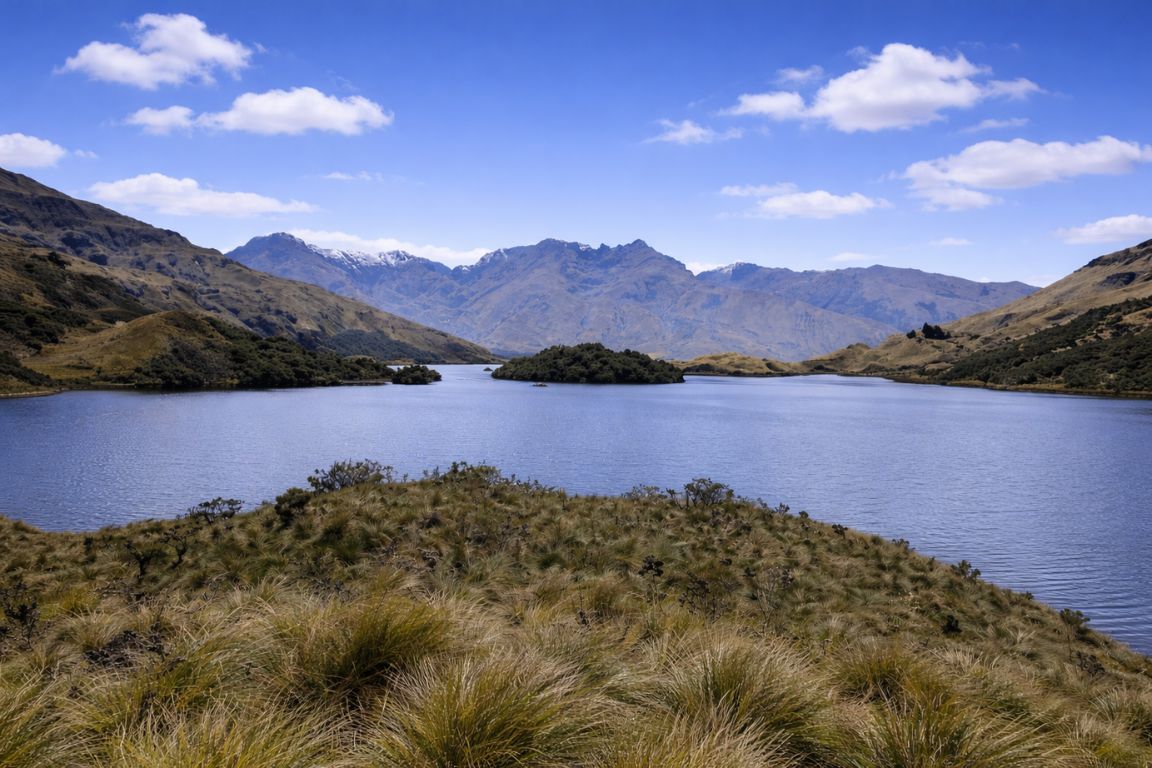
The best time to trek El Altar is November through February, with December as the optimal month. A secondary window runs June through early September. Both windows offer drier conditions, firmer trail surfaces, and higher probability of clear views at Laguna Amarilla. The primary window – November to February – is best specifically for El Altar because this mountain sits on the eastern flank of the Andes with Amazon exposure, which means it follows a different seasonal pattern than western-flank peaks like Cotopaxi or Chimborazo.
Most travel articles about Ecuador hiking list June through September as the single best season and leave it there. That guidance is broadly correct for the highlands and works well for Cotopaxi and Chimborazo. El Altar is different. Its position on the western edge of Sangay National Park means it catches moisture from the Amazon basin on its eastern faces year-round, and the seasonal pattern shifts. The November-to-February dry window is not a secondary footnote here – it’s the best window on this specific mountain, a fact that experienced operators and guides consistently confirm.
The reason December stands out within that window is the convergence of two factors: the main Andean dry pulse peaks in late November through January, and the Amazon’s own seasonal pattern moderates in this period enough that the persistent cloud cover that plagues El Altar in other months pulls back more reliably. December is the intersection of both effects at their strongest. Clear mornings are more consistent in December than in any other month. That directly affects the crater lake experience – if you want to stand at Laguna Amarilla in full view of the nine peaks with no cloud obscuring the caldera, December is your best shot.
Wondering how to pull it all together? Our guide on how to plan a trek in El Altar Ecuador tours walks you through everything from Quito to the crater lake without any guesswork.
What Is El Altar’s Weather Actually Like Month by Month?
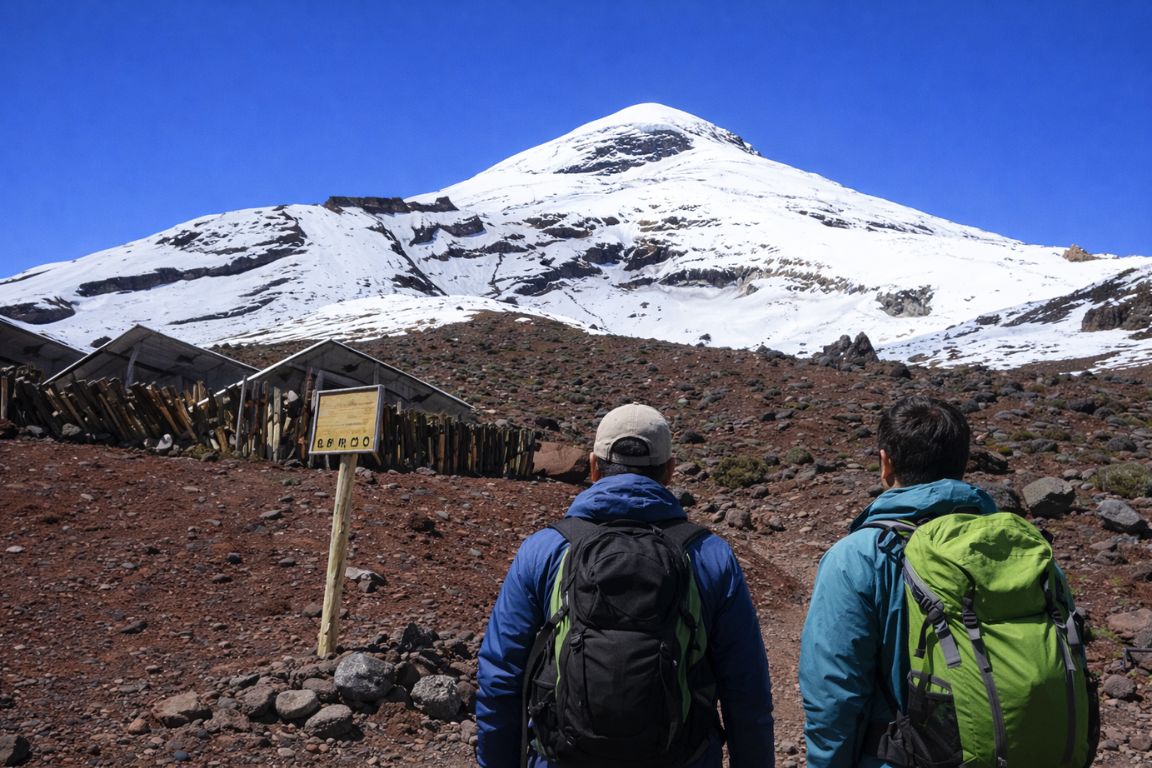 El Altar gets weather from two directions simultaneously: the Andean seasonal pattern that brings dry conditions from June to September and again November to February, and Amazon moisture from the east that doesn’t fully follow that calendar. The result is that even in dry season, this mountain is wetter and cloudier than Cotopaxi or Chimborazo. Temperature at the refuge runs roughly 2°C to 8°C year-round. Mud is a factor in every season – what changes is whether it’s knee-deep or ankle-deep.
January
One of the two strongest months on the mountain. The Andean dry pulse is still running strong, Amazon moisture is moderate, and trail surfaces are in good shape – ankle-deep mud at worst. Crater visibility in the morning hours is reliably good. The one caveat: the first two weeks of January see elevated trekker traffic from the Christmas and New Year holiday period. If you’re planning January, the third and fourth weeks are the sweet spot – conditions remain excellent and the mountain quiets back down considerably.
February
The transition month where the primary window starts losing its edge. Early February – the first two weeks – still delivers very good conditions and is a reasonable time to go. From mid-February onward, rain starts to build and trail mud deepens from ankle to knee in sections. Morning crater visibility is still workable with an early start, but the probability of a fully clear view drops compared to December and January. If February is your only option, aim for the first two weeks and go in with proper waterproof gear.
March
Avoid if you have any flexibility. March marks the wet season peak and the trail shows it immediately. Mud reaches knee depth across extended sections of the Collanes approach. Rain days accumulate – 16 to 18 per month on average at refuge elevation. Crater lake visibility frequently ranges from poor to zero, with persistent cloud cover obscuring the caldera even when rain isn’t actively falling. The physical effort of a March trek is substantially higher than the same route in December for a meaningfully worse visual payoff. Some groups complete it – it’s not impossible – but it is the hardest month and often the most disappointing.
April
The worst month of the year at El Altar. April combines the peak of wet season rainfall with sustained cloud cover and trail conditions that deteriorate faster than any other month. All-day rain is not unusual. Mud reaches knee to thigh depth in the worst sections. The crater lake is frequently invisible from the rim – trekkers stand in fog where the lake should be and see nothing. If you’re planning an Ecuador trip in April, this is not the month to schedule El Altar. Push it to June at the earliest, or wait for the November window.
May
May is a transitional month where conditions start improving week by week as the wet season releases its grip. Early May is still rough – mud remains deep and visibility unreliable. By the last two weeks of May, the trail is noticeably better and morning crater windows are reappearing. It’s not a strong month, but it’s a significant improvement over April. Trekkers going in late May with proper gear and realistic expectations can have a reasonable experience. Just don’t book it expecting December conditions.
June
The secondary dry window opens in June and the difference from May is noticeable from the first days of the month. Trail surfaces firm up, mud drops back to ankle depth, and morning visibility at the crater returns to good. Temperatures drop – days on the trail are cooler than the primary window, and nights at the refuge get genuinely cold. Expect the overnight temperature to push -3°C to -5°C, colder than December. The tradeoff is firmer footing, cleaner air, and a mountain that’s emerging from wet season still vividly green. A solid month. Not the best, but confidently in the viable column.
July
The strongest single month in the secondary window. July delivers the driest trail conditions of the June-to-September period, with sections of the Collanes approach that can be genuinely dry underfoot rather than just ankle-deep. Morning crater visibility is good. It’s peak Ecuador travel season, so trekker traffic is higher than any other month – though “higher” at El Altar still means you might share the refuge with one or two other groups rather than none. Coldest nights of the year happen in July, dropping to -5°C or below at refuge elevation. The -5°C sleeping bag requirement is most critical in this month.
August
August runs close behind July in conditions – still dry, still good morning visibility, still cold nights. The main difference from July is that international tourist traffic peaks in August as European and North American school holidays push more travelers through Ecuador. El Altar remains one of the least-crowded treks in the country regardless of season, but August is when you’re most likely to have company at the refuge. Conditions are excellent. If July fills up or doesn’t fit your schedule, August is a seamless substitute.
September
The secondary window starts closing in September. Early September still delivers conditions close to August – good trail surfaces, workable visibility. By mid-to-late September, the pattern starts shifting toward wetter conditions and the first signs of the transition back toward October’s wet season. September is an acceptable month, particularly the first half, but it’s not the time to push your luck on a 2-day itinerary. If you’re going in September, book the 3-day, start the crater push early, and be prepared for more variable conditions than July or August would have delivered.
October
Wet season is building again in October and trail conditions deteriorate noticeably from September. Rain days climb back to 14 to 16 per month, mud deepens, and crater visibility becomes unreliable – frequently poor, sometimes zero. It’s not as extreme as March or April, but it’s firmly in the “avoid if possible” category. Trekkers with absolutely fixed itineraries sometimes go in October and complete the route, but the experience is harder and the crater lake payoff is statistically much less likely than in the good windows. If October is unavoidable, late October is marginally better than early October as conditions haven’t fully deteriorated yet.
November
November is when the primary window opens, and it does so gradually. Early November still carries residual wet season mud and some cloud persistence. By mid-November conditions are improving clearly – mud dropping toward ankle depth, morning visibility at the crater returning to good. The last week of November is already a strong time to go. The improvement is week-by-week rather than a single switch, so the earlier in November you go, the more wet-season residue you’ll encounter. If November is your month, aim for the second half. If you can push to December 1, do.
December
The best month on the mountain, and it’s not particularly close. December delivers the highest probability of clear morning views at Laguna Amarilla of any month in the year, the driest trail surfaces, the lowest river levels on the Collanes crossings, and – for the first three weeks – the quietest trekking atmosphere of any viable window. The combination of Andean dry pulse at its peak and Amazon moisture at its seasonal minimum produces mornings where the crater opens clear and stays that way long enough to feel unhurried rather than rushed. Book December if you have any flexibility at all. The first three weeks are optimal. Christmas and New Year week sees a brief traffic spike, then January’s first week is also excellent before rain begins gradually building again.
| January | 2-8°C | 8-10 | Ankle | Good | Excellent but New Year crowds mid-month; drops off by third week |
| February | 3-9°C | 11-13 | Ankle to knee | Moderate | Rain increasing from mid-Feb; manageable early in month |
| March | 4-10°C | 16-18 | Knee-deep common | Often poor | Wettest month; trail severely degraded; not recommended |
| April | 4-10°C | 17-19 | Knee to thigh | Frequently zero | Worst month of the year; all-day rain common; avoid |
| May | 3-9°C | 13-15 | Knee, improving | Poor to moderate | Rain easing; last weeks of May workable for prepared groups |
| June | 1-7°C | 7-9 | Ankle | Good | Secondary dry window opens; colder but firmer trail |
| July | 0-6°C | 6-8 | Ankle; can be dry | Good | Driest part of secondary window; peak traffic; coldest nights |
| August | 0-6°C | 7-9 | Ankle | Good | Peak season; most tourists; still excellent conditions |
| September | 1-7°C | 10-12 | Ankle to knee | Moderate | Secondary window closing; conditions variable |
| October | 2-8°C | 14-16 | Knee | Often poor | Wet season building; October and November both problematic |
| November | 2-8°C | 9-12 | Ankle to knee | Good and improving | Primary window opening; improves week by week through November |
| December | 2-8°C | 6-8 | Ankle; minimal | Best of year | Optimal month; driest conditions; highest crater visibility probability |
A few things this table doesn’t capture that matter in practice. Temperature at refuge elevation stays in a fairly narrow band year-round – El Altar doesn’t have cold seasons and warm seasons the way temperate mountains do. What changes is wet versus dry, and the severity of the mud that comes with wet. The overnight temperature at the refuge will drop below freezing regardless of month. A sleeping bag rated to -5°C is non-negotiable in July as much as in December. Don’t let the month selection affect your cold-weather preparation; that stays constant.
The other thing worth stating plainly: “dry season” at El Altar is relative. Even in December, there is a chance of afternoon rain. Even in July, the Amazon influence can push weather onto the mountain unexpectedly. No month at El Altar is a guarantee. What the seasons change is probability, not certainty.
Why December Is the Single Best Month to Trek El Altar
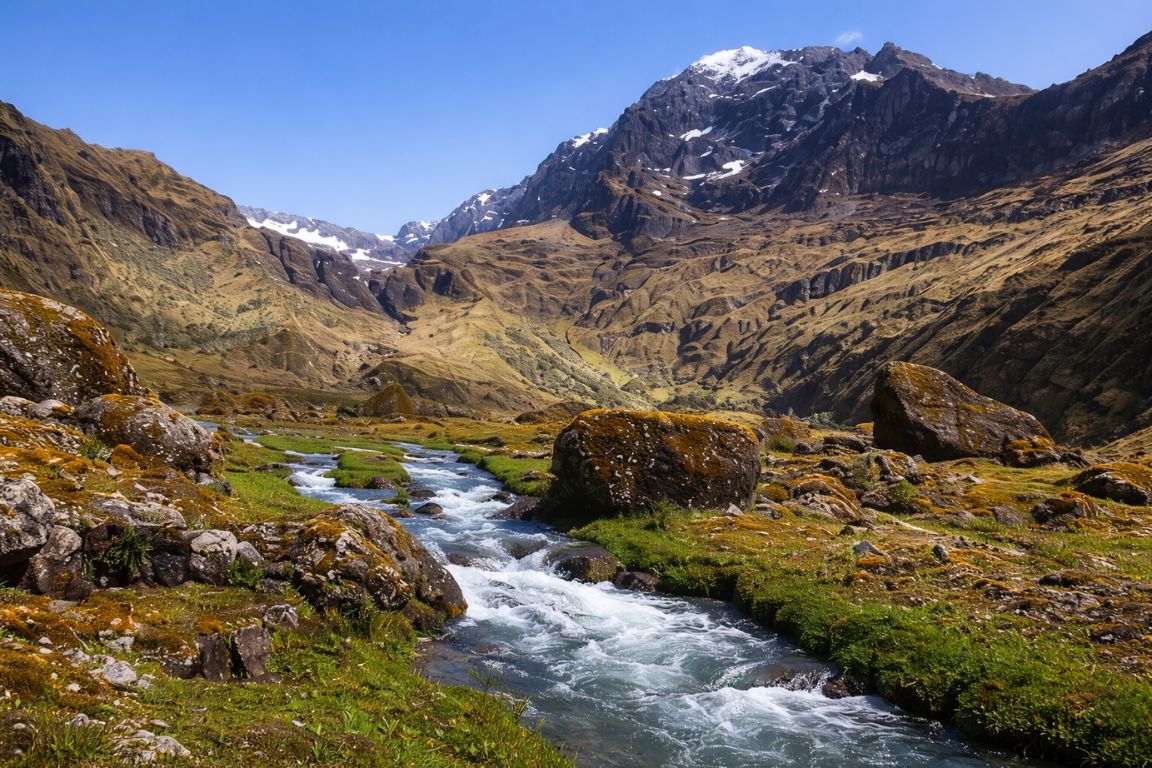 December combines the end of the Andean dry pulse with a seasonal moderation in Amazon moisture that produces the highest probability of clear mornings at the crater of any month in the calendar. Trail surfaces are at their firmest. River levels are at seasonal lows. Visitor numbers are low through the first three weeks – the mountain is essentially yours – then tick up briefly for Christmas and New Year before dropping again in the first week of January. If you have flexibility in your Ecuador itinerary, December is the month to use it on El Altar.
Here’s the specific chain of cause and effect. El Altar sits on the western edge of Sangay National Park, and the crater opens westward. Weather arrives primarily from the Amazon side on the east. In December, the Andean dry season is at or near its annual peak for highland Ecuador, and Amazon rainfall patterns moderate relative to their March-May maximum. The combination means moisture from the east is less persistent and cloud cover burns off more reliably in the mornings. The window of clear visibility at the crater – roughly 6am to noon before the daily thermal cycle draws Amazon moisture up the slopes – is most consistent in December.
Trail conditions in December reflect the low rainfall. The mud that is a defining feature of the Collanes approach in shoulder and wet months is at its minimum. River crossings along the Collanes are at seasonal low depth. The approach from Hacienda Releche through the lower páramo to the refuge, which is the muddiest section of the trek in any other season, becomes a genuinely pleasant walking day in December. Ankle-deep rather than knee-deep. Rubber boots are still mandatory – they always are on this trail – but the physical toll of the mud extraction process that exhausts trekkers in wetter months is substantially reduced.
The visitor timing within December is a practical bonus. Most international travelers don’t arrive in Ecuador until the week of Christmas. The three weeks from December 1 through December 20 are among the quietest of the entire year on this mountain. You will share the refuge with almost no one. The wild horses that roam the Collanes Valley will be your primary company. Then a brief spike around Christmas and New Year, and traffic returns to low levels through early January. If you can land any week in the first three weeks of December, you get optimal conditions and the closest thing to solitude El Altar offers.
The Two Trekking Windows: What Each One Delivers
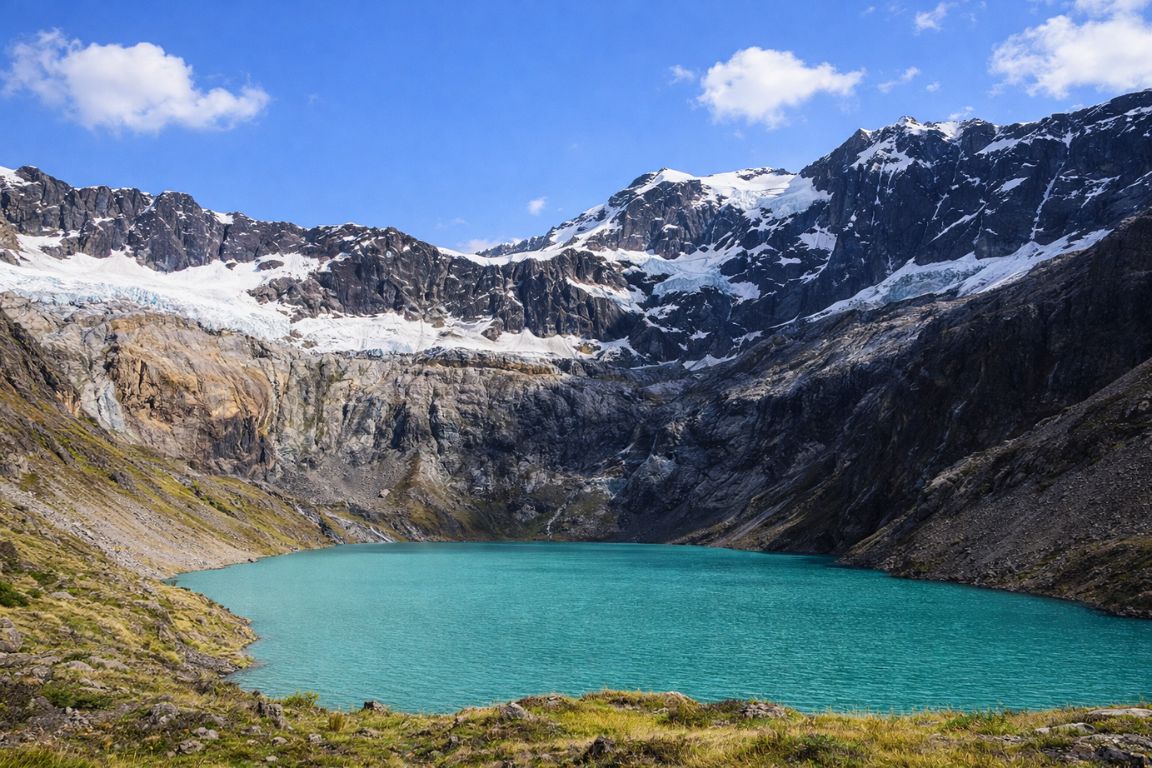 El Altar has two viable trekking windows – November through February (primary) and June through early September (secondary). They’re not interchangeable. The primary window delivers better visibility at the crater lake, warmer days, and lower traffic on a mountain that’s already lightly visited. The secondary window delivers firmer, drier trail surfaces in the lower sections, colder nights at the refuge, and the atmosphere of a mountain in full Andean winter light. Both can produce extraordinary experiences. They produce different ones.
| Crater lake visibility probability | Higher – Amazon moisture moderates in this period | Good, but afternoon winds and cloud more variable |
| Trail mud depth | Minimal to ankle-deep (Dec–Jan); moderate in Feb/Nov | Ankle-deep to dry in good conditions |
| Overnight temperature at refuge | Cold; -1°C to -5°C | Very cold; -3°C to -7°C; July is coldest month |
| Daytime temperature | Warmer; 8-14°C on trail | Cooler; 4-10°C on trail; wind chill significant |
| River levels | Low (Dec–Jan); moderate (Feb/Nov) | Low to moderate |
| Trekker traffic | Low to very low (except Christmas/New Year week) | Higher; July-August is peak season for Ecuador travel |
| Snow coverage on peaks | September-February: more snow on upper peaks (aesthetic bonus) | Less snow by end of secondary window; striking against dry sky |
| Best single month | December | July |
| Who chooses this window | December holiday travelers; anyone with flexibility | European/North American summer holiday travelers; combined Ecuador itineraries |
One factor that separates the two windows that doesn’t appear in any data table: the quality of light. December and January sit just after the wet season in the Ecuadorian highlands, and the air clarity after rain produces a particular luminosity on the peaks. The glaciers on El Obispo and the surrounding summits hold more snow in this period. The crater lake has been replenished. When a clear morning opens in the December window and you’re standing at the rim looking down at Laguna Amarilla, you’re seeing the mountain in its fullest condition – maximum water in the crater, maximum snow on the peaks, maximum air clarity. That aesthetic convergence doesn’t happen in July with the same completeness.
The secondary window’s argument is different. July and August offer the most reliable firm footing on the lower trail sections – the mud, while never absent on El Altar, reaches its annual minimum depth. If mud is a significant concern for your group or if someone has mobility issues that make deep mud particularly challenging, the June-to-August window is worth prioritizing over December precisely because the trail surface is at its best even if the crater visibility trades off slightly.
Timing your El Altar trek around these windows is easier if you check dates on the 3-day Laguna Amarilla trek before you lock flights. Check availability for the 3-day trek from Riobamba to line your travel dates up with a viable window and build the rest of the itinerary around them.
What Happens to the Trail in Wet Season (And Why Some People Go Anyway)
In wet season – March through May and October through early November – the Collanes trail becomes a multi-day exercise in mud management rather than mountain trekking. Knee-deep sections become standard. River crossings run higher and faster. Cloud cover frequently obscures the crater lake entirely. Hypothermia risk rises. It’s not impossible, and some trekkers complete the route in wet season. But the experience is fundamentally different from a dry-season trek, and anyone going in this period should understand exactly what they’re accepting.
What actually happens to the trail in March or April: the páramo grasses that hold the path in dry conditions become saturated and the surface underneath turns to deep, sticky clay. The horses that supply the refuges and carry gear churn the most-used sections into something that looks like a plowed field after rain. Sections that are ankle-deep in December are thigh-deep in April. That’s not hyperbole – the Adventure Junkies account from a wet-season attempt describes calf-deep mud within the first five minutes of the hike, with boot extraction accidents becoming a real issue when footwear is too large.
The practical consequences stack up. Wet-season mud exhausts stabilizer muscles – ankles, calves, hips – two to three times faster than clean trail. A 7-hour Day 1 becomes an 8 or 9-hour Day 1. You arrive at the refuge more depleted. The crater push on Day 2 starts from a lower energy baseline. The steep crater wall section, which is challenging in dry conditions, becomes legitimately dangerous when wet clay offers no grip. And at the end of it, the crater lake may be completely obscured by cloud. Wet-season trekkers sometimes complete two days of hard hiking and see nothing but fog at the rim.
Why do some people go anyway? A few reasons are actually reasonable. Some trekkers simply don’t have flexibility in their itinerary – they have a two-week Ecuador trip and they’re not rescheduling Galapagos or Quito around weather windows. Some experienced wilderness trekkers actively prefer the more demanding conditions and the even-lower traffic. And the wet season experience has its own character: the waterfalls coming off the peaks are at maximum volume, the páramo is vividly green, and the rare clear window in a predominantly foggy trek can feel more earned than a clear December morning.
If you’re going in wet season, the preparation changes. Rubber boots become even more non-negotiable. Gaiters are worth adding. A third day of itinerary buffer is worth building in if you have flexibility, because wet conditions increase the chance of needing an extra day. Sleeping bag rated to -5°C is critical – wet conditions lower body temperature faster. And set honest expectations about crater visibility before you go. The lake will be there. Whether you’ll be able to see it clearly is genuinely uncertain.
Wondering about the risks before you commit? Check out our guide on is El Altar Ecuador trek dangerous – it covers everything from altitude sickness to route conditions.
How El Altar’s Weather Differs From Other Ecuador Treks
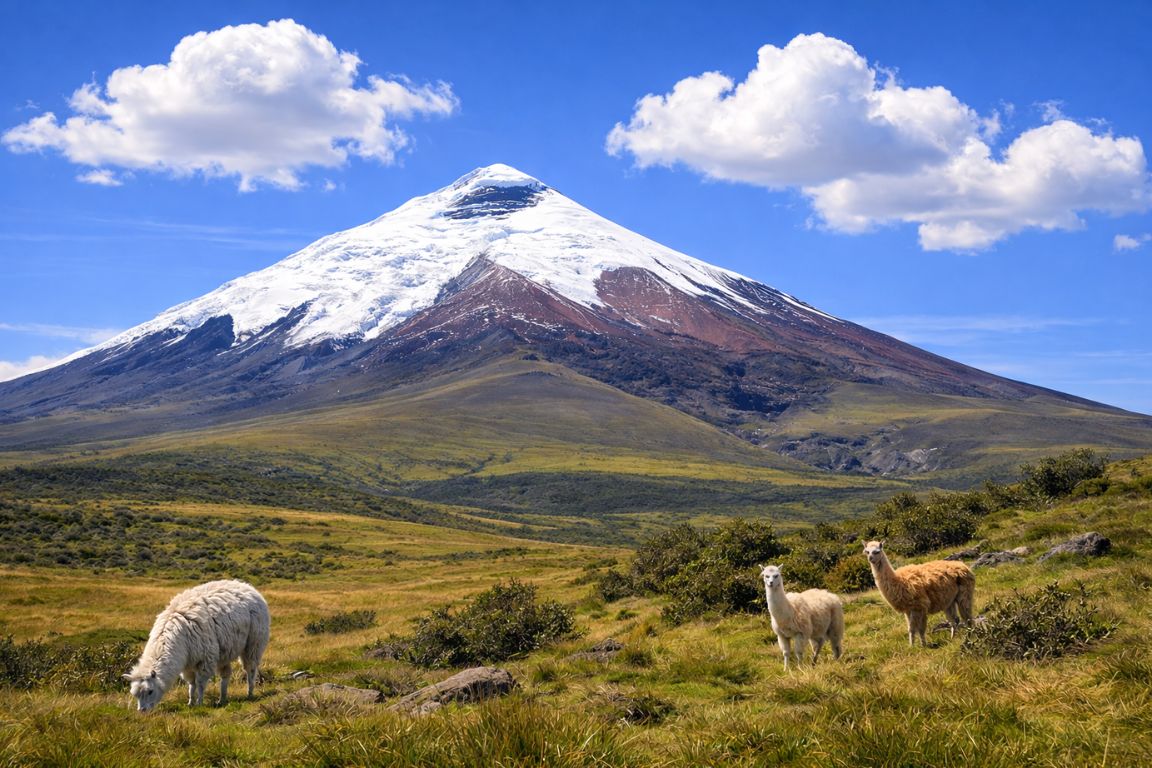 El Altar’s weather behaves differently from Cotopaxi, Chimborazo, and most other Ecuador highland destinations because of its eastern Andean position and Amazon exposure. The broad guidance for Ecuador highland trekking – “dry season is June to September, secondary November to February” – is correct for western-flank peaks but needs adjustment for El Altar. Most importantly: the June-September dry season is less decisively dry at El Altar than it is at Cotopaxi, and the November-February window is stronger at El Altar than most Ecuador guides suggest.
| Primary dry season | November-February (primary); June-September (secondary) | June-September (clear primary) | June-September (clear primary) |
| Amazon weather influence | High – eastern Sangay NP position | Low – western Andes position | Low – western Andes position |
| Year-round cloud cover tendency | High; persistent afternoon cloud even in dry season | Moderate; clearer dry season windows | Moderate; similar to Cotopaxi |
| Mud factor | High in all seasons; extreme in wet season | Low to moderate; dries out more completely in dry season | Low; drier terrain overall |
| Best month for crater/summit visibility | December | June-July | June-July |
| Worst months | March-May; October | February-April; November | February-April; November |
The practical implication for people combining El Altar with Cotopaxi in a single Ecuador itinerary: the windows don’t perfectly align. Cotopaxi’s best window is June to July. El Altar’s best window is November to February. If you’re doing both, you’re necessarily compromising on one of them. The standard combined itinerary that works best for both puts El Altar first in November-December and Cotopaxi second in the same period, accepting that Cotopaxi’s secondary window (November-February) is not quite as strong as its June-July peak. Most guides who regularly run both mountains recommend this sequence anyway because El Altar functions as acclimatization for Cotopaxi.
If your itinerary forces a June-September window and you’re choosing between the two mountains, both are viable. El Altar in July delivers good conditions. It’s not the optimal window but it’s a far cry from wet season. The main adjustments: expect colder nights at the refuge, accept that the crater visibility is slightly less consistently clear than December, and prepare for the chance that wind accompanies the drier air.
If you’re torn between destinations, here’s our honest comparison of El Altar vs Cotopaxi in El Altar Ecuador tours based on difficulty, scenery, and what each demands from you.
What Time of Day Matters as Much as Time of Year
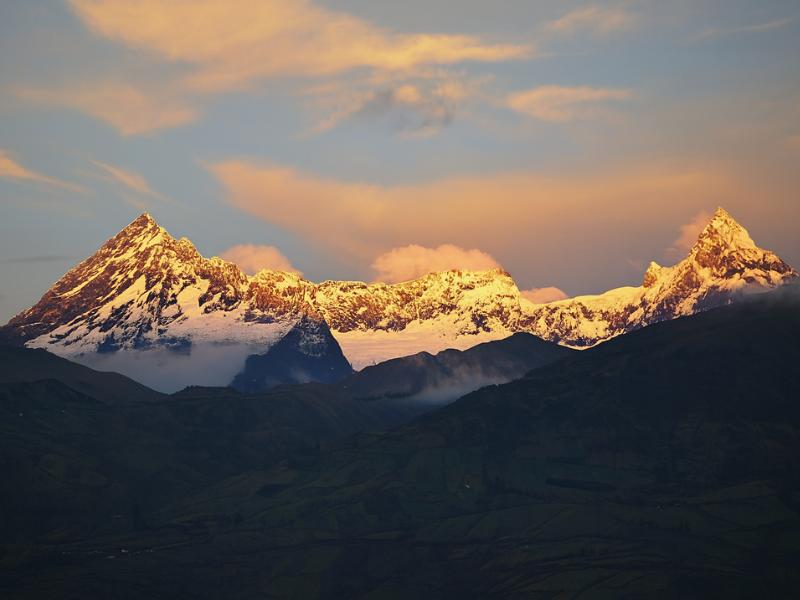
El Altar’s crater lake is most reliably clear between approximately 6am and noon, before daily thermal heating draws Amazon moisture up the eastern slopes and cloud builds over the caldera. This isn’t unique to El Altar – it’s how almost every equatorial mountain with Amazon exposure behaves. But the implication for El Altar trekking is concrete and actionable: the time you depart the refuge for the crater push determines your visibility odds more than any other single in-the-field decision. The 3-day itinerary’s safety advantage over the 2-day also becomes a visibility advantage for exactly this reason.
Here’s the daily weather mechanism. El Altar sits at the interface of Andean cold and Amazon warmth. Each morning, the night’s cooling settles the air and the caldera clears. As the sun heats the lower slopes, convection draws moist air up from the Amazon basin to the east and cloud forms first around the peaks, then descends into the caldera. By noon in most seasons and by 10am-11am in shoulder season, the crater is often obscured. The window is real, and it’s finite.
| 5:00-5:30am (pre-dawn) | 7:00-8:30am | Highest – inside the clear window in all seasons | Cold start; headlamps required; worth every minute |
| 6:00-6:30am | 8:00-9:30am | High in dry season; moderate in shoulder | Best balance of light and clear sky for photography |
| 7:00-7:30am | 9:00-10:30am | Moderate in dry season; lower in shoulder | Still good in December; increasingly risky in other months |
| 8:00am or later | 10:00am+ | Lower – cloud build often beginning | 2-day itinerary typically arrives in this window; visibility risk |
| 9:00am or later | 11:00am+ | Low outside December peak; high cloud probability | The 2-day scenario when Day 1 runs long |
This is why the 3-day itinerary has a visibility advantage beyond its physical benefit. On a 3-day, you sleep at the refuge and start the crater push fresh in the dark. You arrive at the rim before 9am. On a 2-day, the crater push follows a full approach day – you may start it tired, and you may start it later than optimal because Day 1 ran long. The 2-day trekker who arrives at the crater at 10:30am and finds it clouded in didn’t have bad luck. They had a predictable outcome for that timing.
Can’t decide on trek length? I’ve compared 2-Day vs 3-Day trek in El Altar Ecuador tours so you know what you actually gain by taking the extra day at altitude.
Regardless of which itinerary you’re running, the guide’s pre-dawn start call is not optional. Our guides watch the sky from the refuge the previous evening. If conditions suggest the clear window will be short the following morning – building cloud from the east, unusual warmth, strong Amazon moisture flow – we start earlier. Some of the clearest crater lake views happen to people who were standing at the rim at 7am, cold but looking at a perfect reflection of nine peaks in still turquoise water, before the clouds arrived at 10am to obscure the same view for the rest of the day.
When to Book, How Far Ahead, and What to Expect on Arrival
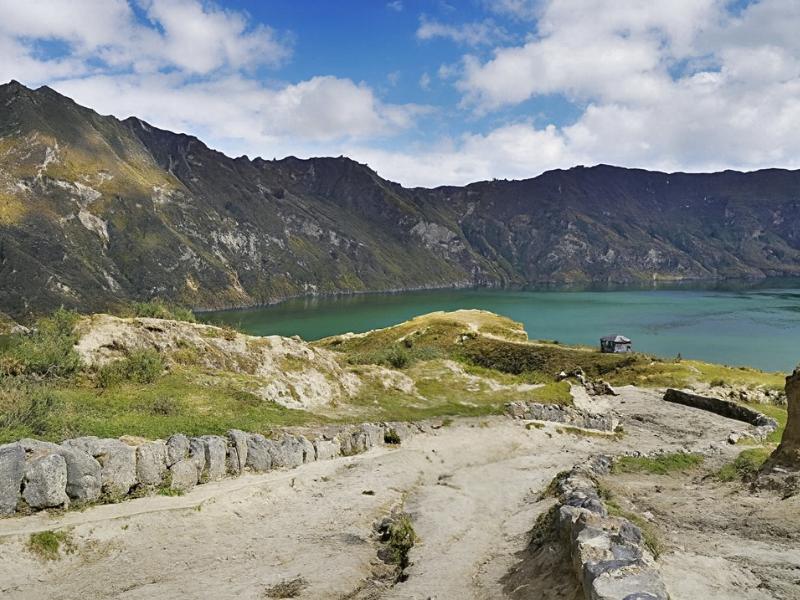
El Altar is not a difficult trek to book – it doesn’t have the permit scarcity of popular routes like Peru’s Inca Trail. But the peak windows have real demand, and December especially has compressed availability because serious trekkers and guide services have been booking it years in advance. For December, book 3 to 6 months ahead. For July and August, book 2 to 3 months ahead. For November, January, and the rest of the secondary window, 4 to 8 weeks ahead is usually sufficient for private groups.
| December 1-20 | 3-6 months ahead | Very low to low | None – standard pricing |
| Christmas / New Year (Dec 21 – Jan 5) | 4-6 months ahead | Moderate (for El Altar) | Possible – peak holiday demand |
| January (after New Year) | 6-10 weeks ahead | Low | None |
| July | 2-3 months ahead | Moderate – peak Ecuador travel season | Possible – high demand period |
| August | 2-3 months ahead | Moderate to high (relative to El Altar’s typical scale) | Possible |
| November, February (early) | 4-6 weeks ahead | Low | None |
| June | 6-8 weeks ahead | Low to moderate | None |
One practical note on the Sunday/Monday access restriction at Hacienda Releche: the hacienda, which is the trailhead for the Collanes route, currently does not permit access on Sundays and Mondays. This doesn’t appear widely in published booking information but affects scheduling significantly. If your ideal departure date is a Sunday or Monday, you’ll need to adjust by a day. Build this into your planning before you commit to flight dates. When you check availability for the 3-day trek from Riobamba, compare departure dates against the Sunday/Monday Hacienda Releche closure before you commit to flights.
What to expect on arrival at the trailhead in optimal season: Hacienda Releche is a working cattle farm, not a lodge with facilities. The starting atmosphere is utilitarian – you register, check gear, distribute weight between packs and mule loads, and start moving. The first section of trail climbs through terrain that still holds residual moisture from even the driest December. Rubber boots from the first step. Guides bring coca tea in a thermos for the trail and gumboots if you don’t have suitable footwear. Pack for cold and wet even in December – conditions at 4,300m bear no resemblance to the afternoon you might have spent in Quito or Riobamba the night before.
From Our Clients: Season and Satisfaction on El Altar
| Clear crater lake view on visit | 78% | 63% | 31% |
| Trail mud described as “extreme challenge” | 12% | 18% | 71% |
| Would recommend the same season to others | 94% | 88% | 52% |
| Trek shortened or abandoned due to conditions | 3% | 5% | 19% |
| Named weather/visibility as primary trip highlight factor | 67% | 58% | 24% |
Reported survey figures are not a guarantee of your outcome. Compare the actual route, inclusions and your own requirements.
Frequently Asked Questions
What is the best month to trek El Altar?
December. It combines the Andean dry season peak with a moderation in Amazon moisture that produces the highest probability of clear mornings at Laguna Amarilla of any month in the calendar. Trail surfaces are at their driest, river levels are at seasonal lows, and the mountain is at its least crowded. January is the second-best month. July is the strongest month in the secondary June-September window.
Is El Altar accessible year-round?
Technically yes – the trek can be attempted in any month. Practically, March through May and October are the periods to avoid if possible. The trail in those months features knee-deep to thigh-deep mud in sections, frequent cloud cover obscuring the crater lake, higher river levels, and meaningfully elevated hypothermia risk from sustained wet and cold exposure. Trekkers do complete the route in wet season, but the experience is significantly harder and visibility significantly less reliable.
How does El Altar’s weather compare to Cotopaxi?
El Altar sits on the eastern flank of the Andes with Amazon exposure, which means its seasonal pattern is different from Cotopaxi’s. Cotopaxi’s best season is June through September. El Altar’s best season is November through February, with December optimal. If you’re doing both in one Ecuador trip, the November-February window works for both peaks – Cotopaxi’s secondary window is strong, and El Altar is at its best. The June-September window works well for both but is not El Altar’s optimal period.
What time should I leave the refuge for the crater push?
Before dawn – ideally between 5:00am and 6:00am. The crater lake is most reliably clear between approximately 6am and noon before Amazon moisture builds cloud over the caldera. A 5:30am departure reaches the rim around 7:30–8:30am, well inside the clear window in almost all seasons. Starting at 8am or later increases the risk of arriving to cloud cover, particularly outside December. This is one of the core operational reasons the 3-day itinerary outperforms the 2-day for crater visibility.
How far ahead should I book El Altar?
For December, 3 to 6 months ahead. For July and August, 2 to 3 months ahead. For most other months in the viable windows – November, January, June – 4 to 8 weeks is generally sufficient for private groups. Note that the Hacienda Releche trailhead currently restricts access on Sundays and Mondays, which affects departure date planning. Work through a guide service that knows this restriction and builds it into your schedule automatically.
Can I do El Altar in July if December doesn’t work for my schedule?
Yes. July delivers very good conditions – the driest part of the secondary window, firm trail surfaces, and good morning clarity at the crater. Nights at the refuge are colder in July than in December (expect -3°C to -7°C versus -1°C to -5°C), so sleeping bag quality matters more. Crater visibility is slightly less consistently clear than December because the Amazon moisture balance is different in the secondary window, but most July trekkers who start before dawn see the lake clearly. July is an excellent month. December is better. Both are far superior to any month in the wet-season windows.
Written by Mateo Santiago Rivera
Ecuador tour guide since 2011 · Founder, El Altar Ecuador Tours
Mateo has guided over 2,200 travelers through El Altar, Chimborazo, and Ecuador’s high-altitude routes since founding the agency.