Trekking tours and mountain adventures in Ecuador's hidden volcano sanctuary
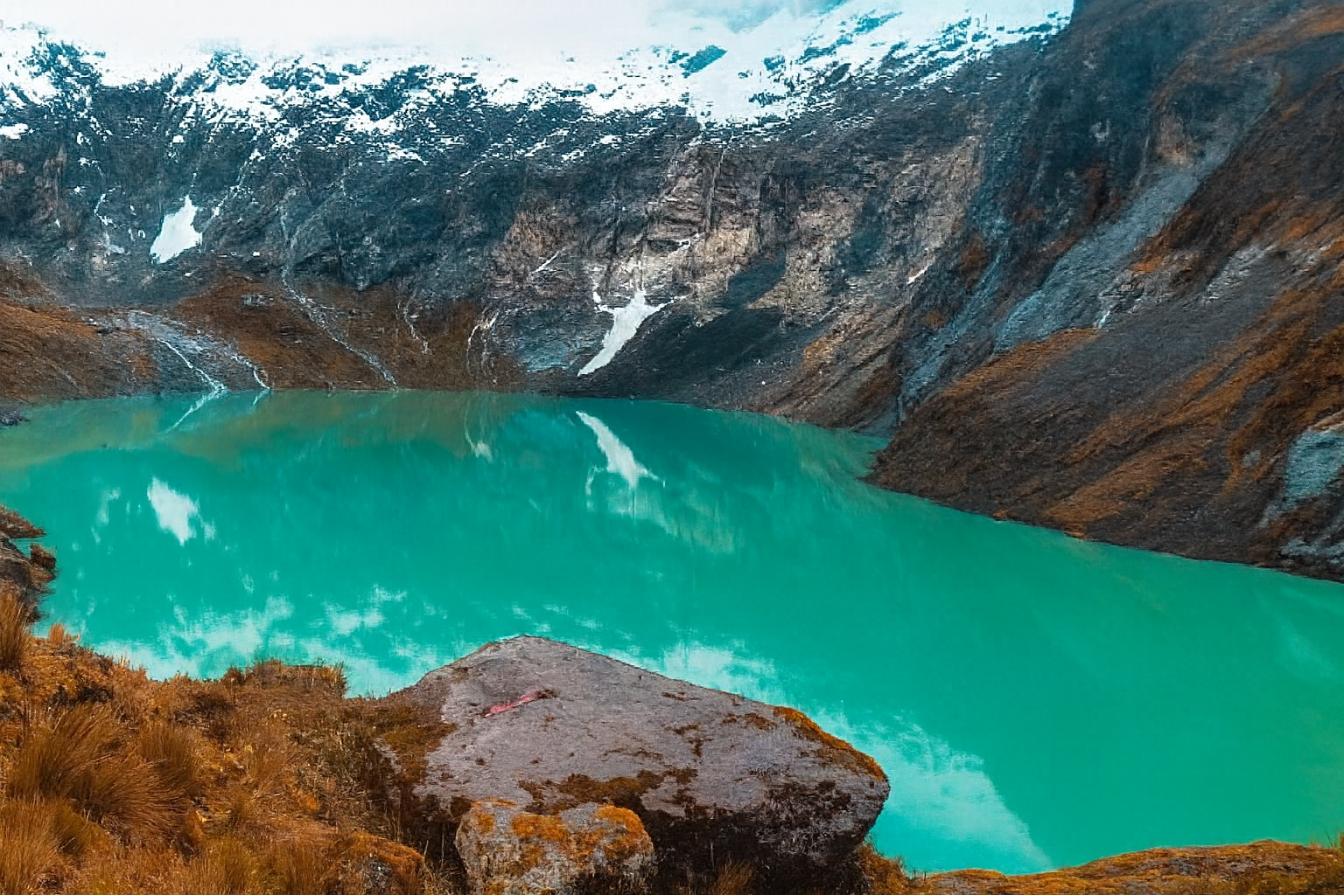
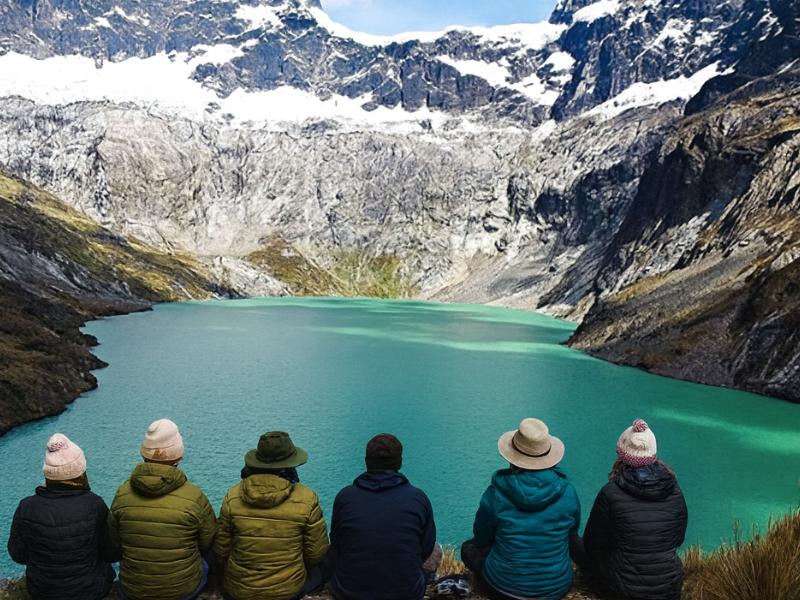
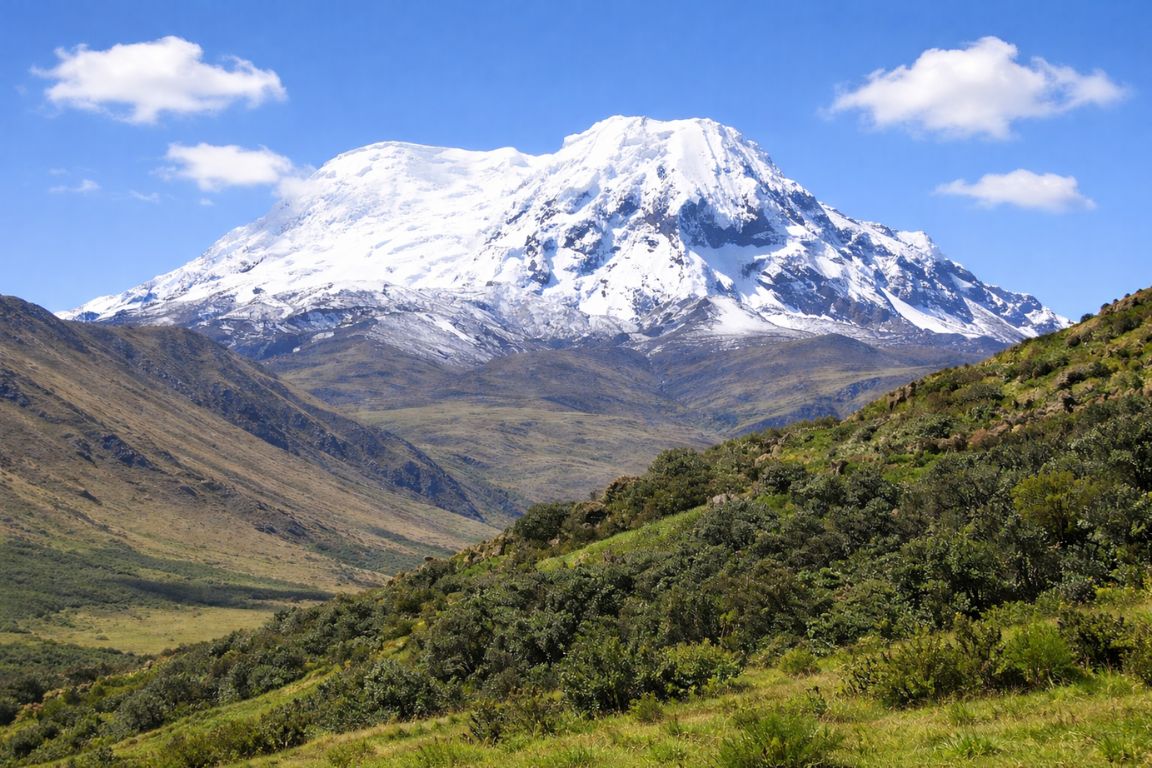
El Altar is one of Ecuador's most spectacular extinct volcanoes, where jagged peaks surround an emerald crater lake and condors soar overhead. Our experienced guides will lead you on unforgettable treks through high-altitude wilderness, past waterfalls and through páramo grasslands where wild horses roam free. From camping beneath star-filled Andean skies to standing at the edge of the legendary Laguna Amarilla, these mountain adventures in Ecuador's remote highlands create memories that last a lifetime.
Our El Altar trekking tours climb to nine turquoise glacial lagoons inside a collapsed volcano crater at 4,300 meters, with wild horses, 5,000-meter peaks, and condors overhead. 3-5 day treks from Riobamba, tents or refugio stays, small groups, real Andean high-altitude punch.
3-day El Altar crater lake trek in Sangay National Park – moderate-to-strenuous high-altitude trails (4-6 hours daily) through muddy Andean wilderness, reach stunning Laguna Amarilla with panoramic volcano views, Collanes refuge lodging, expert guide, all meals and round-trip Riobamba transport included.
El Altar 5-day volcano trek with Activexpedition – eco-focused route to Ecuador’s stunning collapsed crater lake, small-group adventure with expert local guides, authentic Andean immersion, sustainable practices supporting communities, all meals, camping gear, mules and permits included.
Challenging El Altar crater lake trek – remote high-altitude route through muddy Andean trails to Ecuador’s wildest volcano lake, unpredictable weather + demanding terrain, perfect for fit hikers seeking pristine wilderness, summit only for pro climbers, prior acclimatization essential (5 days).
Demanding 2-day El Altar trek from Baños – tough 12km uphill through Sangay National Park to Collanes Valley refuge (3,200m), pre-dawn push to Laguna Amarilla (4,150m) for epic glacier and crater views, refuge lodging, guide, transport, park entry and all meals included, good fitness + acclimatization required, min 2 people.
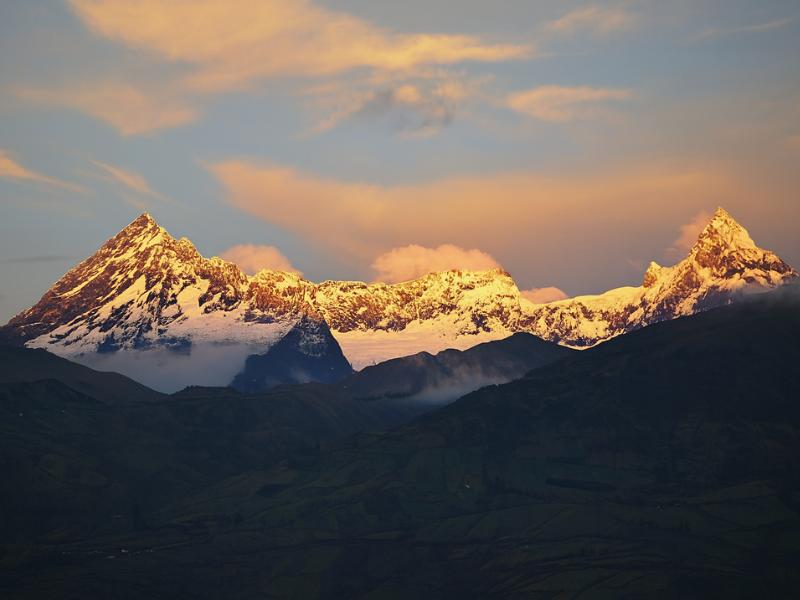
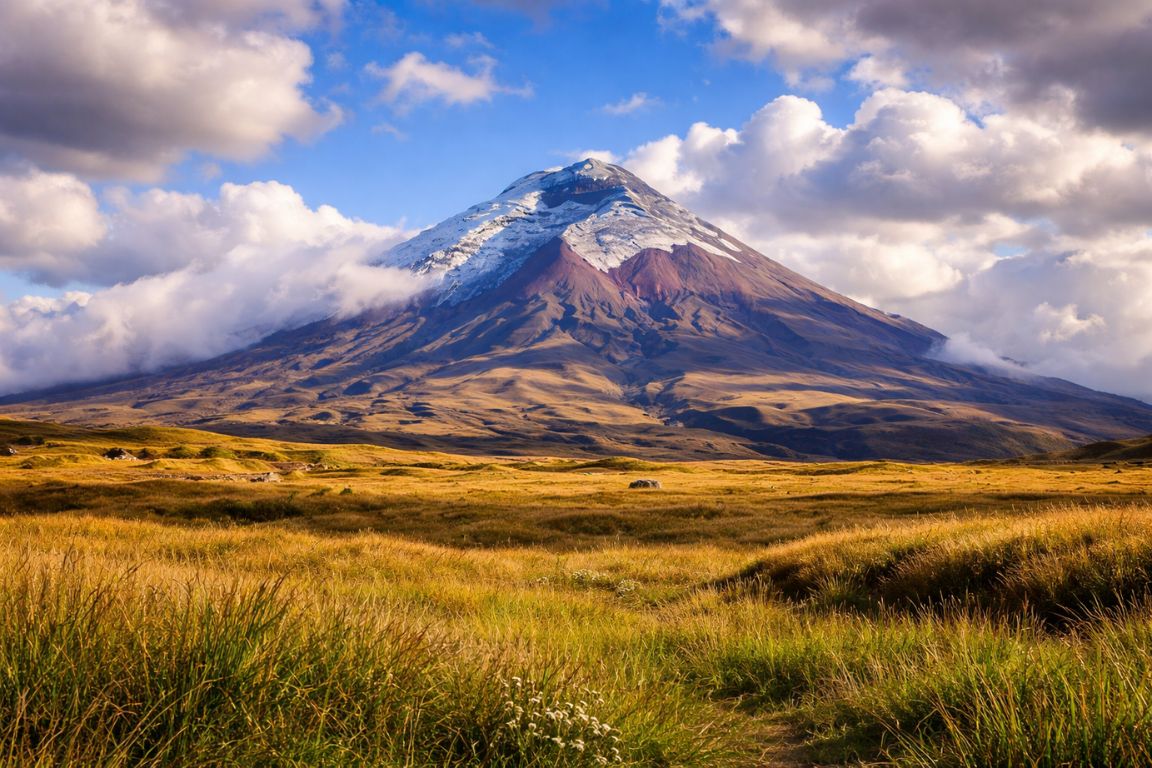
El Altar is the extinct volcano that lost its top in a giant explosion centuries ago and left behind nine jagged peaks circling a turquoise crater lake at 4,200 meters. Locals call it Capac Urcu (The Almighty Mountain) and you’ll get why the first time clouds part and those ice-covered teeth suddenly appear. You hike through páramo grass that smells like wet hay, past wild horses, and camp beside a lagoon that changes color with the sky. With El Altar Ecuador you get real mountain days: tough climbs, thin air, and nights so quiet you hear avalanches echo miles away. One trip here and every other hike feels like a warm-up.
Our expert team has been helping travelers all over the world discover and book El Altar mountain expeditions for over a decade, ensuring your Andean adventure is seamless with everything arranged before you arrive.
With deep knowledge of Ecuador's high-altitude terrain, partnerships with experienced local mountain guides, and a passion for creating unforgettable experiences, we're committed to making your El Altar journey truly extraordinary.
Recognized for Mountain Tourism Excellence
Honored by travelers and adventure tourism organizations
Travelers' Choice Award2024
Guest Experience Excellence2024
Best Adventure Tour Operator Ecuador2023
Outstanding Mountain Service2023
Andean Alpine Tourism Award2024
El Altar trekking questions
What is El Altar and why should I trek there?
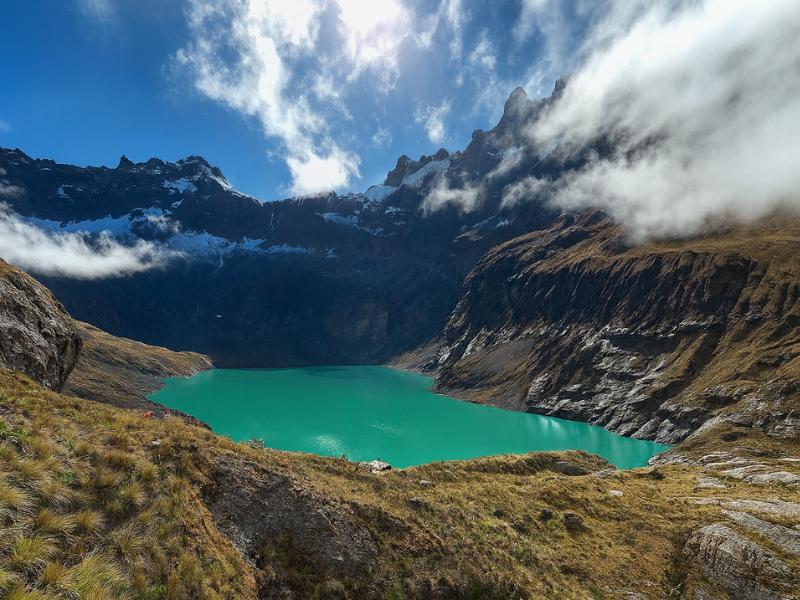
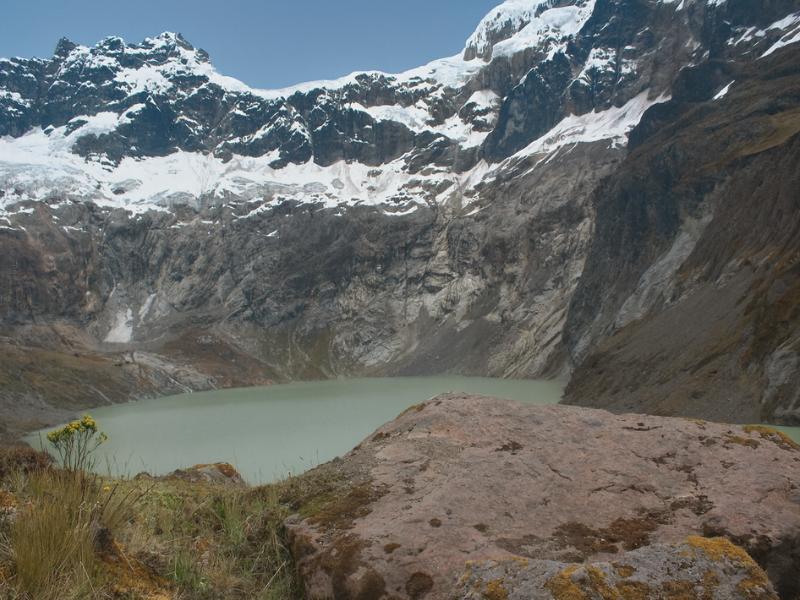
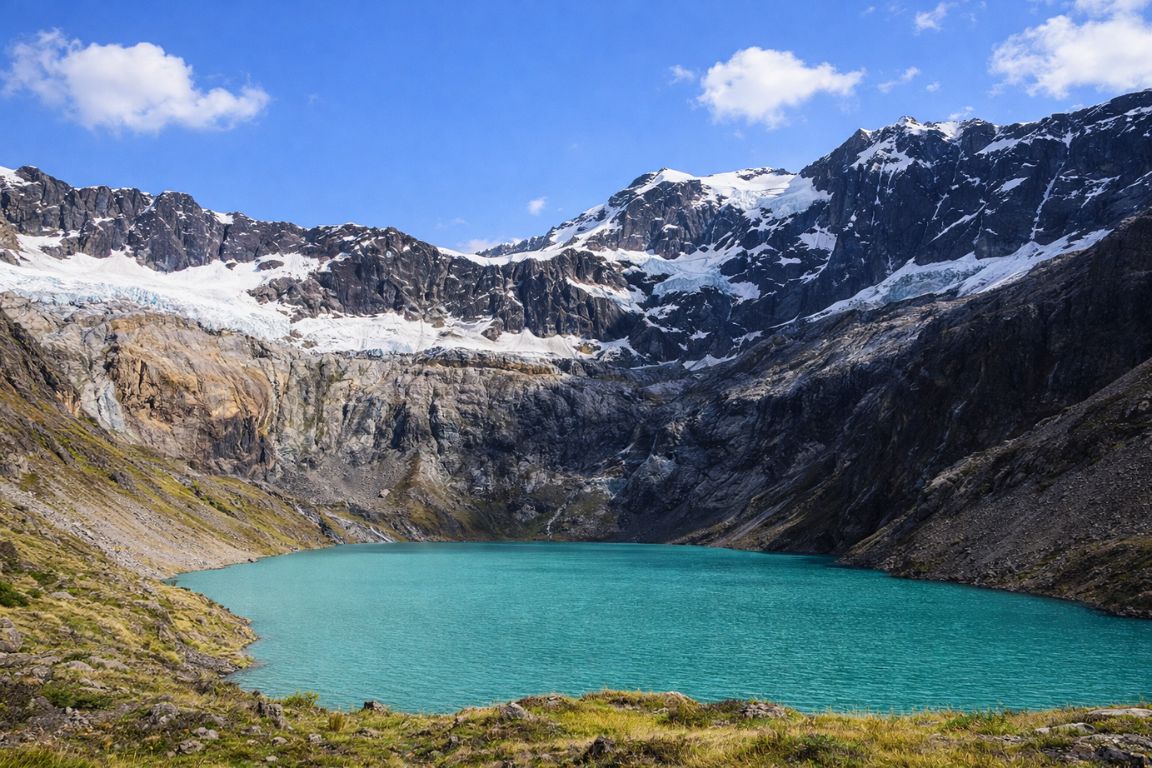
El Altar is a collapsed ancient volcano in Ecuador's Sangay National Park offering one of the Andes' most stunning and remote trekking experiences. At 5,319 meters (17,451 feet), its highest peak El Obispo (The Bishop) is considered Ecuador's crown jewel of technical climbing. What makes El Altar truly special is the complete solitude—you'll rarely encounter other visitors, allowing for days of total disconnection from the modern world. The trek's ultimate reward is the breathtaking Laguna Amarilla (Yellow Lake/Crater Lake)—a surreal turquoise-green lagoon surrounded by nine dramatic volcanic peaks arranged in a reverse C-shape, towering glaciers, and misty clouds. The journey takes you through untouched landscapes with expansive mountain views, snowcapped peaks, countless waterfalls cascading down mountainsides, and lush valleys. This is a must-do for passionate mountain hikers seeking off-the-beaten-path adventures in one of Ecuador's most pristine wilderness areas.
The El Altar trek is physically demanding and recommended for fit, experienced hikers with proper acclimatization. The journey involves 7+ hours of trekking on Day 1 at high altitudes (starting at 3,070m and reaching 4,000m+ at the refuge), navigating steep, extremely muddy trails that can be slippery and challenging, crossing marshy grasslands and small creeks, and scaling a steep, slippery wall on the final approach to Crater Lake. Weather conditions are highly unpredictable—expect rain, fog, freezing temperatures, and dense clouds that can change rapidly due to the volcano's proximity to the rainforest. The mud is the biggest challenge—churned up by horses, the trail features everything from wet dirt to deep sludge, requiring waterproof boots and careful footing to avoid falls. While reaching the summit of El Altar is extremely difficult (suitable only for experienced professional climbers with technical skills), the trek to Crater Lake is achievable for any fit mountain hiker willing to embrace challenging conditions. Acclimatize with other hikes before attempting El Altar to handle the altitude safely.
We've answered the question is El Altar Ecuador trek dangerous with details on what makes this trek challenging and who should think twice before attempting it.
How long does the El Altar trek take?
The standard El Altar trek to Crater Lake takes 3 days/2 nights: Day 1 involves 7-8 hours of challenging uphill trekking from Hacienda Releche (3,070m) through steep, muddy trails to reach Refuge Collanes at approximately 4,000m elevation. Day 2 features 4-6 hours round-trip from the refuge across marshy altiplano grasslands and up a steep, slippery wall to reach Laguna Amarilla, where you'll spend 30-60 minutes soaking in the spectacular views before returning to the refuge. Day 3 is the descent back to the hacienda (4-5 hours)—faster and easier than the ascent, especially with clearer weather. For summit attempts of El Obispo, plan at least 7-10 days to allow proper acclimatization, navigate complex technical routes, and account for weather windows—this requires experienced climbing skills, technical equipment, and professional guides. The 3-day Crater Lake trek is the most popular option for fit hikers wanting to experience El Altar's beauty without extreme mountaineering.
December is the optimal month for El Altar trekking, as it's Ecuador's driest period, offering the best chance for clear skies, manageable trail conditions, and spectacular views of the volcanic peaks and crater lake. Due to El Altar's proximity to the Amazon rainforest, weather is highly unpredictable year-round—conditions can change rapidly with rain, fog, and dense clouds common even during "dry" season. Avoid the wettest months (March-May and October-November) when trails become extremely muddy and dangerous, visibility is poor, and the risk of hypothermia increases significantly. That said, some trekkers successfully complete the journey during other months—just prepare for challenging conditions, pack proper waterproof gear, and embrace the adventure regardless of weather. The refuge is policed only one day per week, so timing can affect whether you need certified guides (now required by Ecuadorian law for multi-day national park hikes, though enforcement varies). December offers your best combination of weather, trail conditions, and unforgettable mountain scenery.
Do I need a guide for El Altar?
Technically yes—Ecuadorian law requires certified guides for all multi-day hikes in national parks including Sangay National Park where El Altar is located. This regulation was implemented after numerous hikers got lost or died in remote areas. However, enforcement is inconsistent—the refuge area is policed only one day per week, and many independent trekkers still complete the journey unguided. Guides cost$50-80 USD per day, which can be prohibitive for budget travelers. We strongly recommend hiring guides despite the cost for several reasons: the trailhead at a small private ranch is extremely difficult to find—hidden from the main road with incomplete signage and a nearby water dam as the only landmark; guides provide invaluable knowledge about local flora, wildlife, weather patterns, and safe routes; they enhance comfort and safety on challenging, remote trails; and supporting local guide services benefits Ecuadorian communities. If trekking independently, ensure you have excellent navigation skills, GPS devices with downloaded maps, emergency communication, and inform someone of your detailed itinerary. For summit attempts, professional guides are absolutely essential—the technical climbing is extremely dangerous without expert leadership.
How do I get to El Altar?
Riobamba is the closest city and base for El Altar treks, located 6 hours south of Quito by bus. From Riobamba, getting to the trailhead requires careful navigation: take a taxi or private van for the 1-hour drive through mountains to Hacienda Releche, the official starting point in Sangay National Park where you must register before beginning. The trailhead is notoriously difficult to find independently—it's at a small, private ranch hidden from the main road with a nearby water dam as the best landmark, and roadside signs are incomplete and often won't lead you directly there. Hiring transportation through your guide service or hotel in Riobamba is highly recommended to avoid getting lost. Most organized tours include transportation from Riobamba to the trailhead and back. From Quito: Take a bus to Riobamba (6 hours, frequent departures), spend a night acclimatizing, then arrange onward transport to Hacienda Releche the next morning. Solo travelers: Join tour groups in Riobamba or hire private guides who handle all logistics including transportation, making the journey significantly easier.
What are the nine peaks of El Altar?
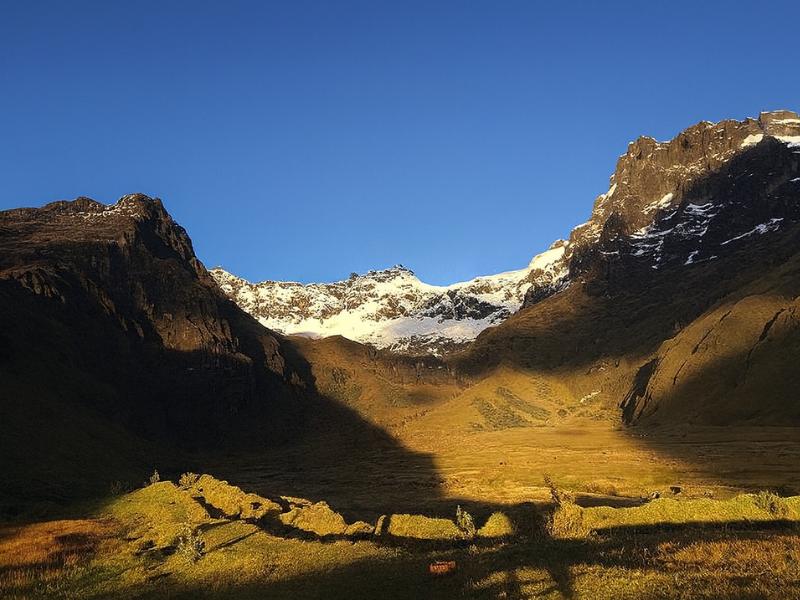
El Altar's nine prominent peaks are organized in a dramatic reverse C-shape around the crater. Starting with the highest point in the south and working counterclockwise, the summits are: El Obispo (5,319m/17,451ft—the highest and most popular), Monja Grande, Monja Chica, Tabernáculo, Fraile Oriental, Fraile Beato, Fraile Central, Fraile Grande, and Canónigo. The names translate to religious titles (The Bishop, The Great Nun, The Small Nun, The Tabernacle, and various Friars), reflecting the Spanish colonial influence on Ecuadorian geography. El Obispo is the most accessible peak and offers some of Ecuador's best technical climbing in favorable weather conditions, with three main routes to the summit depending on snow conditions. Each peak presents unique challenges and rewards for experienced mountaineers. From Crater Lake, you'll have spectacular views of all nine peaks towering around you, creating an amphitheater of snow-capped volcanic summits—one of the Andes' most impressive mountain panoramas.
Essential gear includes: Waterproof rubber boots (absolutely critical—required for the extremely muddy trails; regular hiking boots work only for the final section from refuge to Crater Lake); warm, waterproof layered clothing (fleece, down jacket, rain jacket and pants—expect freezing temperatures and constant rain); waterproof gloves, warm socks, and beanie/cap for cold, wet conditions; sturdy, waterproof backpack (25-40L for personal items if horses carry main gear, or 60L+ if carrying everything); sleeping bag rated to 0°C/-15°C (refuge provides bunks but no bedding); headlamp/flashlight with extra batteries (no electricity at refuge); trekking poles for stability on steep, slippery terrain; high SPF sunscreen and lip balm (intense UV at altitude); water bottle or hydration system (1-2L capacity); GPS device or compass with topographic maps downloaded offline; personal first aid kit with altitude sickness medication, blister treatment, and any prescription medications; whistle for emergencies; contact lenses instead of eyeglasses if possible (glasses fog constantly in rain); and snacks/energy food for long trekking days. Pack light but don't skimp on weather protection—conditions can be brutal.
What is the trail like on the El Altar trek?
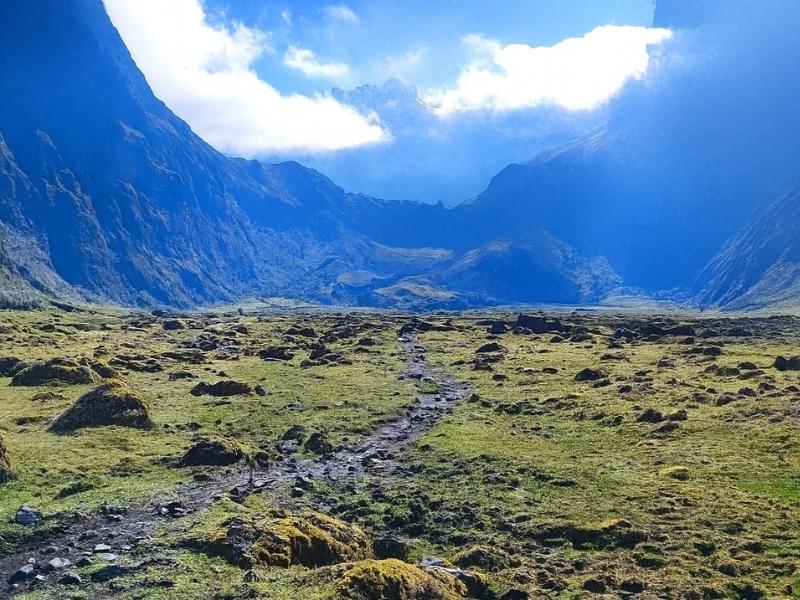
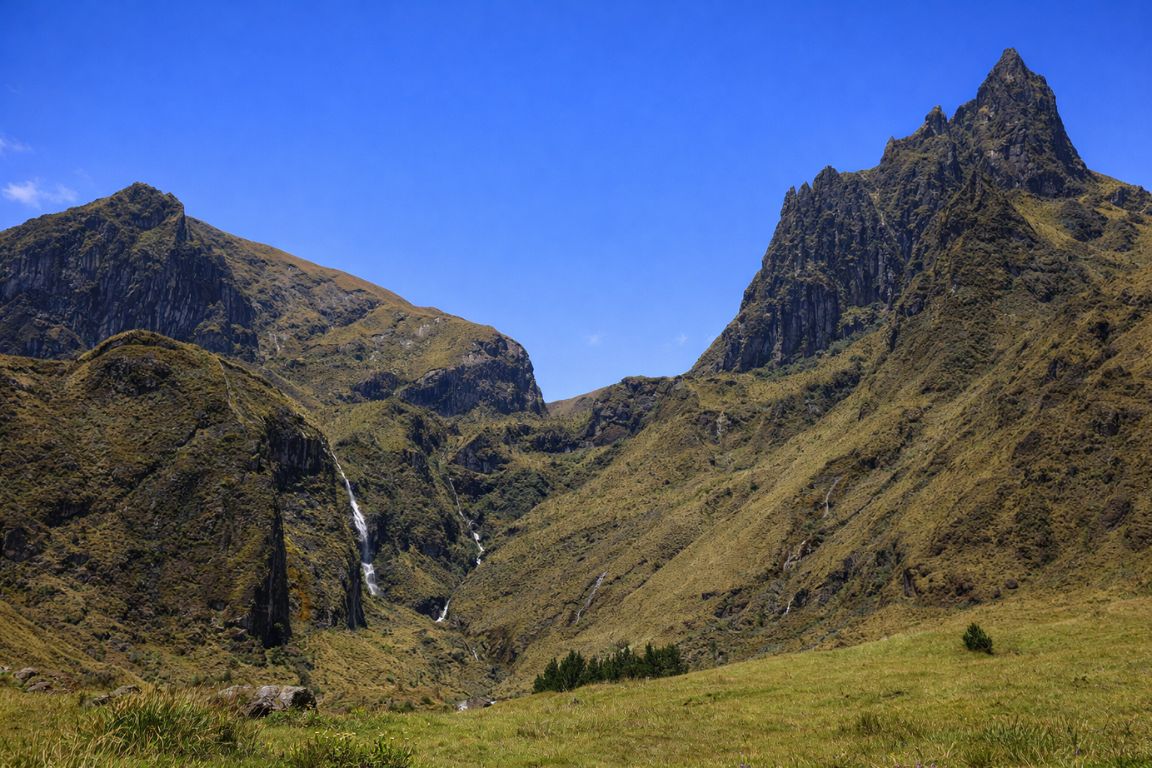
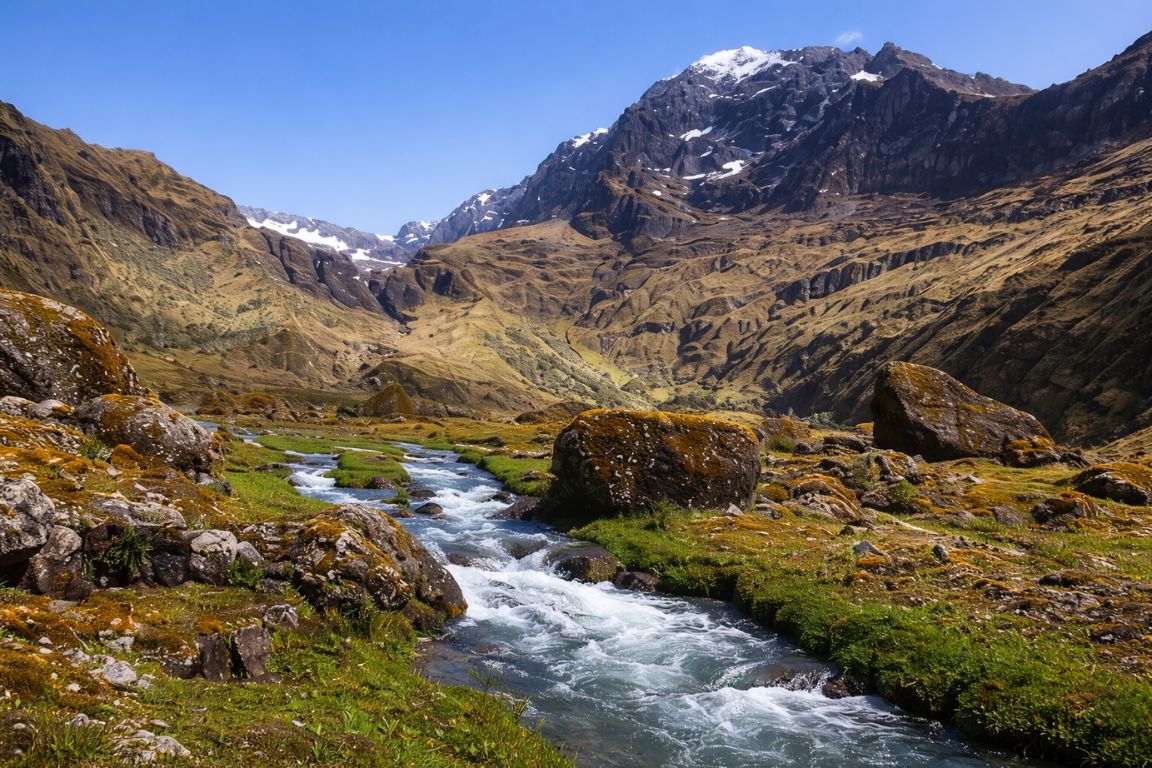
The trail features diverse and challenging terrain. Day 1 ascent begins on a dirt track following a gully through thin tree lines and fields with grazing cows and flowers, then climbs steeply for 2 hours up the hillside before transitioning to less steep but extremely muddy sections—the mud is the trail's defining characteristic, churned up by horses into everything from wet dirt to knee-deep sludge. You'll wade through countless muddy patches trying to avoid falls (not always successful). The landscape transitions from green valleys to higher altitude terrain with spectacular views back down the valley. Day 2 to Crater Lake crosses vast marshy altiplano grasslands at ~4,000m elevation with dozens of waterfalls cascading down surrounding mountains, small creek crossings, and rocky meadows before the final steep wall climb—slippery, challenging, and made harder by rain and altitude. Day 3 descent is faster and easier, especially with drier conditions. Throughout the trek, expect 7+ hours daily of hiking through mud, across streams, over rocky ground, and up steep grades—all at high altitude where breathing is labored and every step requires effort.
What wildlife and scenery will I see on El Altar trek?
The El Altar trek showcases incredible Andean biodiversity and dramatic volcanic landscapes. Flora includes over a dozen species of colorful wildflowers growing even at high altitudes—perfect for nature photography during breaks. The landscape transitions from lush green valleys with grazing livestock and agricultural fields to sparse high-altitude grasslands, marshy meadows, and finally barren volcanic terrain near the crater. Waterfalls are everywhere—dozens cascade down mountainsides creating a constant soothing soundtrack to your hike. Wildlife may include Andean birds, occasional livestock (cows with large horns sometimes share the trail), and horses used for carrying equipment. The ultimate scenic reward is Laguna Amarilla—the stunning turquoise-green crater lake surrounded by nine towering snow-capped volcanic peaks, massive glaciers, and swirling mist creating an otherworldly, surreal beauty. The 360-degree mountain panoramas throughout the trek are breathtaking, with glimpses of El Altar's white peaks appearing and disappearing through clouds. On clear days, the views stretch across endless Andean ridges—truly one of Ecuador's most spectacular and photogenic trekking destinations.
What is the altitude like on El Altar and how do I acclimatize?
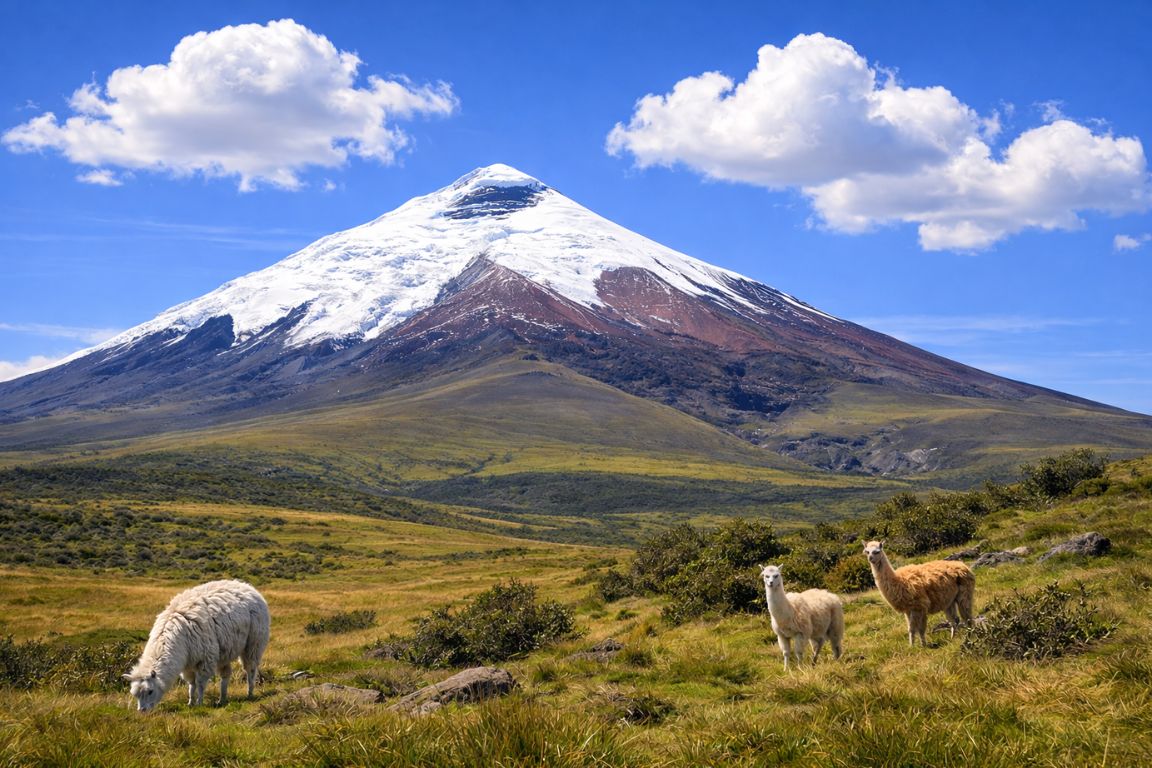
El Altar involves significant altitude that affects most trekkers. Starting elevation at Hacienda Releche is 3,070m (10,072ft), Refuge Collanes sits at approximately 4,000m (13,123ft), and Crater Lake reaches about 4,200-4,300m (13,780-14,100ft). At these elevations, expect reduced oxygen levels causing shortness of breath, fatigue, headaches, and slower pace—even fit hikers struggle, especially on Day 1's long ascent. Proper acclimatization is essential: spend 2-3 days in Quito (2,850m) before heading to Riobamba; complete 1-2 acclimatization hikes at similar or higher elevations (Cotopaxi, Quilotoa, or other Ecuadorian peaks) in the days before El Altar; ascend gradually—the 3-day itinerary helps by spending nights at intermediate elevation before reaching maximum heights; stay hydrated (drink 3-4 liters daily); avoid alcohol before and during the trek; and listen to your body—descend immediately if experiencing severe altitude sickness symptoms (severe headache, nausea, confusion, difficulty breathing). The final wall climb to Crater Lake is particularly challenging due to altitude, steep grade, and thin air—take frequent breaks and don't rush.
If you're nervous about the high altitude and remoteness, here's the honest answer to is El Altar Ecuador trek dangerous so you know what you're getting into.
Is El Altar suitable for beginner hikers?
No, El Altar is not recommended for beginners. This trek requires significant hiking experience, strong physical fitness, and comfort with challenging conditions. Ideal candidates have completed multiple multi-day backpacking trips, hiked extensively at high altitudes (3,000m+), navigated difficult terrain including mud and steep ascents, and possess mental toughness to handle discomfort, unpredictable weather, and long days without giving up. Beginners should start with easier Ecuadorian treks like Quilotoa Loop, Cotopaxi day hikes, or shorter trails in Cajas National Park to build experience before attempting El Altar. That said, "beginner mountaineers" can succeed if they're fit, properly acclimatized, hiking with experienced guides, and have realistic expectations about the challenges. The trek to Crater Lake doesn't require technical climbing skills—just endurance, determination, and ability to handle adverse conditions. Absolutely avoid El Altar if: you have no high-altitude hiking experience, limited fitness, expectation of comfort, or health issues that altitude could exacerbate. For summit attempts, only experienced technical climbers with proper training and equipment should attempt—it's one of Ecuador's most difficult and dangerous climbs.
A Typical Trek Day on El Altar
One day on the mountain, hour by hour, the way the guided treks actually run it.
6:00 amDepart Riobamba by vehicle, gear packed and checked
7:30 amArrive at Hacienda Releche trailhead, 3,070 meters
7:45 amTrek begins through lower páramo, gradual climb
10:00 amFirst rest stop, elevation gaining, pace slows
12:30 pmLunch break on the trail, cold by now
2:30 pmCollanes Valley comes into view, terrain flattens briefly
3:30 pmArrive at Collanes refuge, 4,000 meters
4:00 pmRest, dry gear, warm food prepared
7:00 pmDinner, guide briefing for the crater lake push tomorrow
8:30 pmSleep, the altitude decides when
Day one of the El Altar trek is the honest one. Seven to eight hours of uphill through some of the muddiest trail in Ecuador, gaining roughly 1,000 meters from the hacienda to the Collanes refuge, with weather that can shift from clear to soaked and back again before you've finished lunch. We tell every client before they depart: this is not a moderate hike with a difficult section. The whole day is demanding, and the mud is the thing that catches people off guard. Not ordinary mud, but deep, horse-churned Andean sludge that grabs at your boots, tests your balance on every step, and turns sections of otherwise straightforward trail into exercises in concentration. Waterproof boots are not optional. Gaiters are worth every penny.
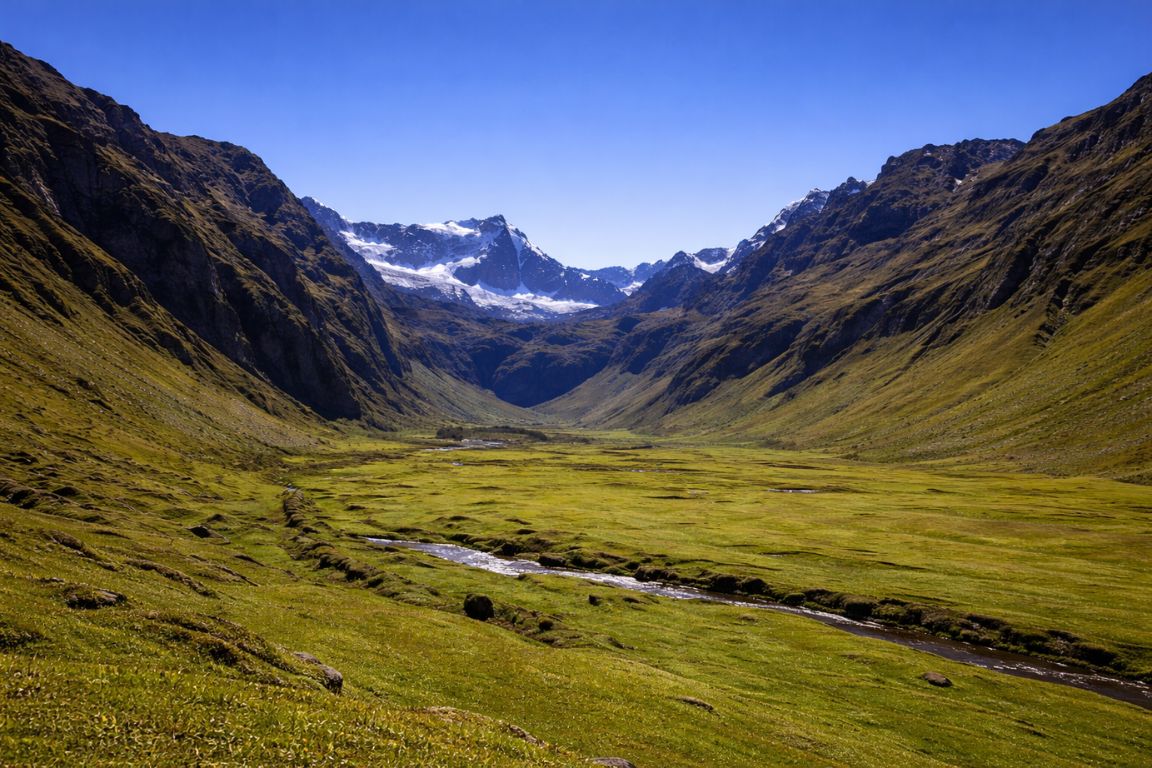
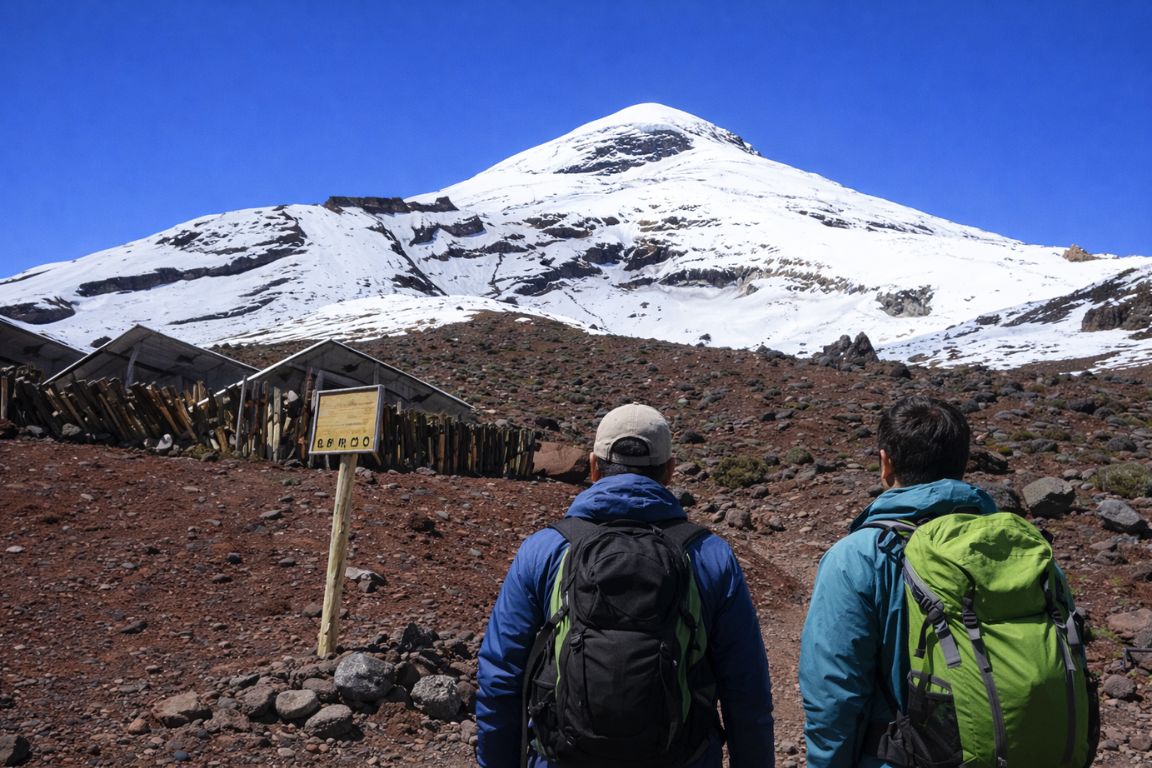
The páramo is the landscape you spend most of Day 1 moving through, and it deserves more than the word “grassland” suggests. The high Andean moorland that covers this elevation band is an ecosystem found almost nowhere else on earth: low, wet, dense vegetation that smells of cold rain and organic matter, crossed by small streams and dotted with yellow-flowered plants that survive at altitudes where most life gives up. Wild horses appear without warning on the open stretches. Condors are occasional overhead presences that the guides spot long before clients do. El Altar Ecuador tours have been running these trails for years, and the guides read the mountain the way people read a familiar text, knowing where the footing goes soft, where the route cuts uphill more aggressively, and where to stop so the group can look back down into the valley and register how far they've come.
Here is what we tell clients about altitude before the trek begins: 4,000 meters is not theoretical. It affects your breathing, your pace, your appetite, and your mood, often without you noticing until you've pushed past what your body was ready for. The standard advice applies and we mean it: acclimatize with at least one or two prior hikes at elevation before attempting El Altar, drink water continuously, eat even when you don't feel hungry, and move at the pace the guide sets rather than the pace your ego prefers. Clients who've done other high-altitude hikes in Ecuador before arriving at the El Altar trailhead have a dramatically more comfortable experience than those who fly in and go straight to 4,000 meters. The mountain doesn't negotiate on this point.
Day 2 is the payoff. The push from the refuge to Laguna Amarilla at 4,200 meters takes four to six hours round trip across marshy altiplano grassland and up a steep, slippery wall on the final approach to the crater rim. The last section requires real effort and careful footwork. Then the lake appears. Nine volcanic peaks arranged in a horseshoe curve around a turquoise-green crater lake, with glaciers above and mist moving through the gaps in the rock. It is one of those places that earns the effort in a direct and uncomplicated way. Clients stand there for a while without saying much. The guides have watched this scene hundreds of times and they still give people space when it happens. The return to the refuge is faster, and by mid-afternoon the mountain is usually back in cloud.
Day 3 is the descent, four to five hours back down to the hacienda, physically easier than the climb but hard on the knees and still requiring attention on the muddy sections. Most clients arrive back at the vehicle tired in a way that is different from other kinds of tired, quieter and more settled. The drive back to Riobamba takes about an hour and a half. Dinner that evening tends to be a thorough one. El Altar Ecuador doesn't offer a gentle introduction to the Andes, but the clients who come prepared for what it actually is consistently tell us it was the hardest and best thing they did in Ecuador. That combination is not a coincidence.
Average Tour Prices in El Altar, Ecuador
Prices below are what you'll pay when booking through our verified operators online. They are current as of early 2026. All multi-day treks include round-trip transport from Riobamba or Quito (depending on the tour), guide fees, park entry into Sangay National Park, meals, and either refugio lodging or full camping gear with mule support. El Altar sits at high altitude in a remote corner of the Andes, and no single operator can be credited with “owning” the mountain. What varies between tours is the route taken, the number of days, the level of technical difficulty, and how much logistical weight the operator carries for you.
All prices per person based on small groups unless otherwise noted. Minimum 2 people applies on the 2-day expedition. Technical ascent pricing varies by group size, summit objective (El Obispo 5,319m, Monja Grande, Canónigo, or Frailes), and equipment requirements. Contact us directly for technical route quotes.
Online vs. Self-Arranged vs. Local Agency in Riobamba: How Booking Method Affects What You Get
Booking Method
Typical Price Range
Risk Level
Book Online in Advance (via verified operators like El Altar Ecuador)
$225 to $1,500+ depending on duration and route
Low: certified high-altitude guide confirmed before departure, mule logistics pre-arranged, Sangay National Park permits secured, meals and gear accounted for, free cancellation available on most tours
Arrange Locally in Riobamba (book through a hostel, walk-in agency, or independent guide on arrival)
Potentially 15 to 25% less
Medium: guides vary widely in high-altitude certification and first-aid training; mule availability is not guaranteed on short notice; Sangay National Park can limit access without advance permits during peak seasons; no written cancellation terms
Self-Guided / Independent Trek
Low upfront cost, unpredictable total
High: El Altar's trail system is poorly marked and weather in the páramo can deteriorate without warning; Laguna Amarilla sits at 4,200 meters and the approach requires route knowledge; rescue infrastructure is essentially absent once you leave the Collanes Valley refugio
The Honest Case for Booking with El Altar Ecuador in Advance
El Altar is not Cotopaxi. There are no well-worn tourist trails, no crowds at the refugio, and no infrastructure safety net if something goes wrong above 4,000 meters. The mountain sits inside Sangay National Park in one of the least-visited corners of the Ecuadorian Andes, which is precisely what makes it so worth the trip. It is also precisely what makes a properly organised guide non-negotiable. Getting to Laguna Amarilla requires navigating páramo grasslands that look similar in all directions, crossing rivers that swell fast when the Andean weather turns, and camping or sleeping at altitude in conditions that punish under-prepared visitors quickly. The guides working these routes know where the paths are even when they disappear into mud, which matters more than it sounds on day two with wet boots and thinning air.
The logistics difference between booking in advance and sorting things out in Riobamba is most visible in the mule question. Every multi-day El Altar trek depends on mules to carry camping gear, food, and emergency equipment into the Collanes Valley. Local mule handlers are not on-call services. They run on relationships and advance notice, and a last-minute booking that does not include a confirmed mule arrangement is one that either leaves you carrying 15kg of gear at altitude or leaves you waiting in Riobamba for a day while arrangements catch up. The tours listed through El Altar Ecuador have that logistics chain already in place.
The 5-day options also deserve some honest comparison. The Unknown Andean Trail at $1,319 and the 5-Day Expedition at $1,500 are genuinely different experiences from each other. The Unknown Andean Trail takes indigenous routes that bypass the main Collanes Valley approach entirely, adds a hacienda night and a five-star hotel night in Quito, and is designed for travelers who want cultural depth alongside the physical challenge. The 5-Day Expedition is a more focused wilderness immersion with eco-operation principles, smaller groups, and community support built into the price. Neither is “better” in an absolute sense. The right call depends on whether you are here primarily for the mountain or for a broader Andean experience that happens to include it. Either way, the price reflects what a certified mountain guide, full mule support, permits, meals, and honest small-group logistics actually cost in this part of Ecuador.
How to Visit El Altar
El Altar is not the kind of destination you can improvise. It sits inside Sangay National Park at high altitude, the trailhead is genuinely difficult to find independently, and the mountain has a way of humbling people who arrive underprepared. That said, it is one of the most rewarding treks in Ecuador, and the logistics are straightforward once you understand them. Here is what everyone who contacts El Altar Ecuador hears from us before they start planning.
Riobamba is the base city for El Altar and sits about six hours south of Quito by bus. Most visitors spend at least one night there before the trek begins. It is a functional Andean city with good accommodation options and everything you need to sort last-minute gear or supplies before heading into the mountains.
2
Acclimatize properly before you start.
This is not optional advice. The trek begins at 3,070 meters and the refuge sits at around 4,000 meters. Most trekkers spend at least two to three days in Quito at 2,850 meters before arriving in Riobamba, and ideally do one or two day hikes at altitude beforehand. We always tell visitors: the single biggest reason people fail to reach the crater lake is arriving too fresh from sea level. Your body needs time.
3
Come in December if you can.
El Altar sits close to the Amazon side of the Andes, which means weather is unpredictable and frequently wet regardless of season. December offers the best chance of clear skies and manageable trail conditions. March through May and October through November bring the heaviest rain and the worst mud. That said, the trail is muddy year-round. This is not a destination you visit expecting dry boots.
4
Book a guide, and treat this as a firm recommendation rather than a suggestion.
Ecuadorian law requires certified guides for multi-day treks in national parks. Beyond the legal side, the trailhead at Hacienda Releche is genuinely hard to locate without local knowledge, the trail markings are incomplete, and the terrain above the refuge demands experience in high-altitude navigation. An experienced guide also handles transport from Riobamba to the trailhead, which is otherwise another logistical puzzle to solve independently.
5
Plan for the standard three-day itinerary.
Day one is the long push from the trailhead to the Collanes refuge, roughly seven to eight hours of steep, muddy climbing. Day two is the round trip from the refuge to Laguna Amarilla, the turquoise crater lake surrounded by nine volcanic peaks. Day three is the descent. Two days is technically possible but leaves almost no margin for weather delays, and the approach to the lake on day two already requires an early start. Three days is the honest minimum.
6
Pack rubber boots for the lower trail, not just hiking boots.
The mud on the lower sections of the trek, churned up continuously by the horses used to carry equipment, is not standard trail mud. It is deep, adhesive, and in places genuinely ankle-deep. Guides and local operators will tell you the same thing. Waterproof hiking boots are fine from the refuge upward. Below that, rubber boots protect your footwear and your footing in ways nothing else does.
7
This trek is not suitable for beginners.
El Altar is physically demanding, high altitude, wet, cold, and remote. People who have done a few day hikes and consider themselves reasonably fit often find day one of this trek significantly harder than expected. Ideal candidates have multi-day high-altitude trekking experience, are comfortable with unpredictable mountain weather, and can handle long days on difficult terrain without support. If El Altar is your first serious Andean trek, spend time on something like the Quilotoa Loop or a Cotopaxi day hike before committing.
8
The one thing most first-timers get wrong:
underestimating the final climb to the crater lake. After a demanding day one and a cold night at the refuge, day two requires crossing exposed marshland before ascending a steep, slippery wall to reach Laguna Amarilla. At 4,200 meters, this section hits harder than it looks on paper. The people who make it to the lake and find it genuinely worth every step are the ones who started day two knowing it would be hard and paced themselves accordingly. Rushing this section is how people turn back fifty meters short of one of the most remarkable views in the Andes.
Most Popular El Altar Ecuador Tours
Tap a column heading to sort.
El Altar is not a beginner destination. The trails are deep in mud, the altitude is serious, the weather changes without warning, and the crater lake at 4,200 meters requires a real commitment of days and fitness to reach. The three tours that lead all El Altar Ecuador bookings by volume reflect that honestly: none of them are short, none are cheap, and all of them treat this trek as the serious Andean expedition it is.
Experienced mountaineers and technical climbers seeking a fully guided, high-commitment Andean expedition
Remote high-altitude route through muddy Andean trails to Ecuador's wildest volcano lake, unpredictable weather and demanding terrain, pristine wilderness, summit option for professional climbers, prior acclimatization essential
Fit trekkers who want the most immersive and logistically complete El Altar experience, including a hacienda night and Quito hotel
Ancient indigenous routes to the crater lake, sacred peak reached only by locals, star-filled Andean nights with storytelling guides, 3 nights wilderness camping plus 1 hacienda night plus 1 Quito 5-star hotel, all gear, mules, private transport and certified English-speaking guide. Most meals included
Fit and acclimatized hikers who want the core El Altar experience, Laguna Amarilla and back, in the most efficient format
Moderate-to-strenuous high-altitude trails of 4-6 hours daily through muddy Andean wilderness, Laguna Amarilla with panoramic volcano views, Collanes refuge lodging, expert guide, all meals and round-trip Riobamba transport
4.5 (2,315+ bookings)
The wide price gap between the top two and third tour is worth understanding before you book. The 3-day option from Riobamba is the accessible entry point and covers the crater lake properly. The Unknown Andean Trail adds days, depth, and a very different relationship with the mountain, following routes that most visitors never find. El Altar Ecuador sees both types of traveler consistently, but what all three tours share is a guided format. This is one of the few places where going without a certified local guide is not a cost-saving measure worth considering.
Location
El Altar is an extinct volcano deep within Sangay National Park in the Ecuadorian Andes, about 170 km south of Quito and roughly an hour's drive from the city of Riobamba, which is itself about 3.5 hours by road from Quito's Mariscal Sucre International Airport (UIO). At 5,319 metres, it is surrounded by nine jagged peaks arranged in a horseshoe around a glacial crater lake, a formation so dramatic that the Spanish named it after a cathedral altar. The combination of high-altitude páramo grassland, glaciers, and proximity to the Amazon basin creates a climate of rapid, unpredictable weather shifts that is as much a part of the experience as the landscape itself. Take a look at the map below to see where our tours move through the park and surrounding region.
Guarantee Your Spot with El Altar Ecuador Tours
El Altar is not a casual day hike. It is a multi-day high-altitude expedition into a remote collapsed volcano inside Sangay National Park, and the logistics are genuinely complex. The trailhead is notoriously hard to find independently, Ecuadorian law requires certified guides for national park treks, and the best operators run small groups on routes that require real planning. You do not figure this one out when you arrive in Riobamba.
Book before you leave Quito. The mountain will still be there, but your preferred dates and guide may not be.
What you lock in when you book in advance:
A certified, experienced guide. This is not optional or bureaucratic. The trail to Laguna Amarilla is remote, heavily muddy, and unmarked in sections. Guides here have spent years on these routes. Booking through El Altar Ecuador Tours means your guide knows where the trailhead actually is, what the current conditions are, and what to do if weather turns at 4,000 meters.
Your place in a small group. The most reputable operators run groups of 8 to 12 people maximum. Combine that with limited departure dates and December's dry season window, and available spots go faster than the mountain's reputation suggests.
Equipment and mules coordinated in advance. Rubber boots, camping gear, mules for load carrying, and refugio space at Collanes all need to be arranged well before departure day. This is not equipment you source in a Riobamba market the morning of.
Transport to the trailhead sorted. The drive from Riobamba to Hacienda Releche involves navigating to a private ranch with incomplete signage. Your operator handles this. Without them you are genuinely likely to waste half a day finding the starting point.
A clear plan for altitude acclimatization. At 4,200 meters, Laguna Amarilla will test anyone who has not spent time adjusting. Booking with a structured itinerary means your rest days, acclimatization hikes, and trek schedule are calibrated before you ever lace your boots.
El Altar rewards the people who treat it like the serious mountain expedition it is. Come prepared, come with the right guide, and the crater lake will be worth every muddy step.